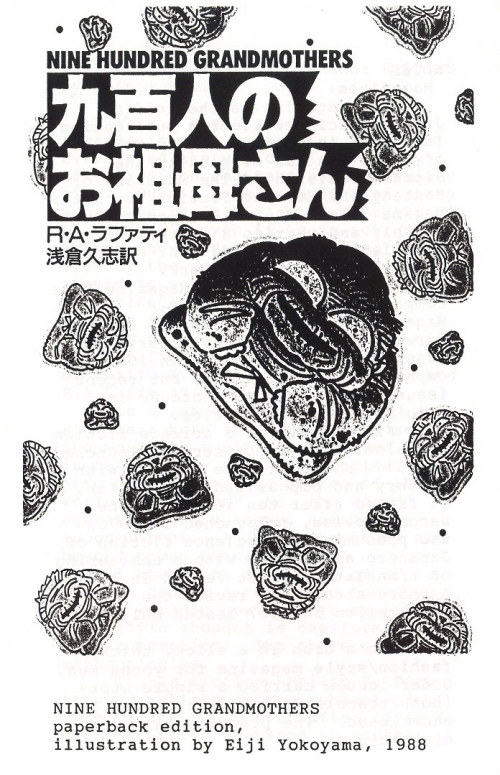
Thursday, August 18, 2011

The Rough Account of The Group of Twelve: 3. Solomon Izzersted (excerpt from R. A. Lafferty's East of Laughter)

‘Lector Delectus, if you are standing up, sit down for a moment. If you are alone, call somebody to be with you until a strange thing has been narrated to you. People do sometimes faint in the presence of sheer horror, and in doing so they often injure themselves. And people do sometimes come unhinged if they face diabolism uncompanioned.

‘John Barkley Towntower was born with a dark and sullen growth on his belly. When John was very small, this growth was very, very small, but already it looked like a miniature human head and face. And soon it became clear that the growth was more precocious than was John himself. It learned to talk before John did. At first, for a long time, the only words that it said were “My name is Solomon Izzersted, my name is Solomon Izzersted”, and it spoke this always in a horrible, screaming, rasping voice. This puzzled Mr. And Mrs. Towntower for they had no Solomon and no Izzersted in any of their antecedents.

‘Mrs. Towntower the mother of little John Barkley Towntower (and apparently of the shocking growth that called itself Solomon Izzersted also) tried to kill the growth with a hatchet, but she came closer to killing John Barkley than Solomon. Mrs. Towntower was then incarcerated in Eastern Oklahoma Hospital, and she is still there thirty-eight years later. John Barkley, soon after he learned to talk with his own voice, also learned to do the Solomon Izzersted voice with his own mouth and throat. And he made, when he was four years old and just starting to grade school, the first of the little Solomon Izzersted mannequins which he wore and manipulated on his hand like a glove. And John Barkley and Solomon Izzersted became an established ventriloquist’s act by the time that John was six years old. They played not only in their own school but also children’s hospital wards about town, and for all sorts of parties. And they were good. People, they were good! And they got better. And whenever, in the midst of an act or at another time and place, the furious and ugly little head of Solomon Izzersted himself would pop out through John’s shirt-front and the furious voice would shout “My name is Solomon Izzersted, my name is Solomon Izzersted”, why, it was thought to be only a part of the act, the best part of it. And the other kids, completely enraptured by the display, would cry out to John “How do you do it, how do you do it?” And John would say self-depreciatingly “Oh, it’s just a little trick that I worked up.”

‘(Dismiss your companion now if you wish, Lector. If you have survived, then you have survived the most horrible part of the symbiotic account.)

‘John and Solomon made a sort of truce with each other, though they never felt real fraternal love each for each. John became, by choice, a fat boy (do you remember those early Milky Way candy bars?) and then a fat man; and he kept Solomon pretty well smothered in his rolls of belly fat. But Solomon was a ham, and he loved to act. It was always his live voice now that was central to the act. When John was through college and was established (to the small but intense circle of people who matter) as one of the great mathematicians of the world, Solomon still compelled the arrangement that they should spend six months of each year touring with their fabulous ventriloquist act. People who didn’t understand said that it was a shame that one of the greatest mathematicians in history should have to put on a variety stage act to eke out a living. But that wasn’t the case at all.’

-R. A. Lafferty, East of Laughter (1988), pp. 11-13

Friday, July 8, 2011

Some Initial Thoughts on R. A. Lafferty's Fourth Mansions

It's usually agreed that Lafferty is stronger at his short stories than his novels. The wonderful weirdness that is usually a strength at the short story length can sometimes threaten to become overwhelming, or even unreadable incoherence, at novel length. Nevertheless, besotted fans of Lafferty's short stories are impelled by sheer addiction to his prose--the sweaty, shaky need for more Laffertian lore, from any source whatever--to wade into the novels and grapple with Lafferty's uber potent strangeness in depth, for one long sustained narrative. And though Lafferty fanatics are often not a little baffled by the novels, we tend to go back for more!

Besides Fourth Mansions, I've read the following novels by Lafferty: Past Master, Reefs of Earth, Space Chantey, Arrive At Easterwine, The Devil Is Dead, Annals of Klepsis, Where Have You Been Sandaliotis, and The Three Armageddons of Enniscorthy Sweeney. That's nine novels in total (over a period of about as many years), so it's not as if they're unreadable. Indeed, you get the hang of them. You start to love some of them, or parts of them, as much as the short stories. In fact, I've read the afforementioned Past Master, Annals of Klepsis, and Space Chantey at least twice-over each (the latter two I even read out loud to my children!) for sheer pleasure--just delighting to savour again the prose and the narrated events.

The bottom line is that I've found, basically, however Lafferty's novels may compare to the short stories, however much they may or may not 'succeed' as cohesive versions of that particular art form - they usually ALL contain some amount (usually quite a lot) of solid Laffertian gold.

Interestingly, despite the sometimes overwhelming concentration (or diffusion) of weirdness in Lafferty's novels, I have usually found them quite 'easy' reads. I can usually get through them in fairly short order. Despite the wonkiness, they still manage, oddly, to have a fairly page-turning flow. The novels sometimes reel, roil, and riot, but they seem to be eminently finishable.

But this is where Fourth Mansions was the exception to the rule for me. When I first tried to read it some 8 or 9 years ago, I just couldn't finish it. I had finished all the ones I had read before that and have subsequently finished all the ones I've read after abandoning it. I knew that a number of fans and critics considered Fourth Mansions Lafferty's best (and some even said it was possibly his most coherent plot), but this just baffled me as I found that its story just didn't pull me in beyond a few chapters and the strangeness wasn't cohering into anything inviting for me. I gave up half way through. I knew also that some fans found Fourth Mansions to be one of Lafferty's 'worst' novels. (The R. A. Lafferty Devotional Page categorises it as 'lame'--below even 'OK'--then again, how LAME is it that a site 'devoted' to Lafferty even has the category 'lame' for his works! Honestly, I admit I've read what comes close to 'average' from Lafferty, but 'lame'? Never.)

Anyway, I assumed that since I had more or less easily downed all the other novels I'd tried, this one was just truly flawed. Still, I had always intended to go back and get through it. I recently read a 1975 paper by Sheryl Smith on Arrive At Easterwine that mentioned Lafferty had written three 'end-of-the-world comedies'--Past Master (1968), Fourth Mansions (1969), and Easterwine (1971)--which she recommended reading in that order if possible. I found this to be a fresh way of labelling and grouping some of his works. Having recently re-read Past Master and planning to re-read Easterwine soon, I decided now was the time to finally muscle through to the end of Mansions.


Basic result? I totally missed it on my first reading. This is an amazing book. Definitely one of Lafferty's very best and most important. It is packed with tons of the finest of Lafferty's prose on a lot of levels. It is also packed with fantastic marvels and action-adventure (of an utterly bizarre variety, of course) as well as Lafferty's usual long and creative portions of exposition - ranging from various types of conversations to college lecture Q&A sessions to prophets preaching on the streets. It is bristling with a wonderful cast of weird and well-sketched characters of various ethnicities and powers and beings. The pedestrian protagonist, newspaper reporter Freddy Foley, is a bumbling favourite for me alongside Past Master's Thomas More.

The novel is still very, very strange and hard to follow and even hard to finish toward the latter half (though all the later chapters are as good as the early chapters - it's just that mere mortals flag in trying to quaff one of Lafferty's most potent brews). Yet it is full of joys and thrills and pleasures.

In one sense it is a sustained meditation on a theology of monsters (which is very exciting for one of my lifelong study projects). But even more centrally, it is another crucial piece in the puzzle that Lafferty's body of work constructs: a profound, pungent, tenacious argument that we need to wake up and rebuild intellectual and spiritual DIMENSION in an intellectually and spiritually FLAT modern/postmodern world.

‎'Somehow there is the belief that people in the Dark Ages believed that the world was flat. They didn't. But it is the contemptuous ones of today who have made a really flat world that is the sad answer to everything. What is wrong with the world and why is it not worth living in? It's flat, that's what.' (Fourth Mansions, p. 59)

This novel, as all of Lafferty's work, joyously and rambunctiously attempts to diagnose this problem and proffers a beautiful and scary cure: unleash all the metaphorical, metaphysical, and material monsters inside us and outside us, reintegrated under the good rule of God again, freed to gleefully destroy a fake world that has been foisted on us and gruesomely rebirth a real one again.

That diagnosis and cure is no doubt unpalatable to many, but Lafferty is cooking and seasoning a musky rump roast according to his own recipe (yet one he claims is not at all his own) and he has a disarming and seductive way of wafting wonderfully inviting aromas our way, inciting our salivating mouths and rumbling bellies.

Wednesday, June 15, 2011

Sizeable Excerpt from The Devil Is Dead


A song I wrote called 'Close Encounters of the Ominous Ape-Cat' was inspired by a chapter from Lafferty's novel The Devil Is Dead. On my theology of monsters blog I quote a sizeable excerpt from the novel, from the chapter called '36,000 Pieces of Paper', which I reproduce here:


'It was nighttime, and Finnegan had gone feral.

'He did not, as Papa Devil had done briefly, regrow his lost stripes and become a tiger. Finnegan was a smaller and other breed of cat; or ape, perhaps; or climbing grotesquerie.

'There was in that city a small hotel of curious gothic style. It ran up to parapets and to those stone knobs that are called merlons. At this moment there was a living gargoyle sitting on one of those merlons and it seemed perfectly natural there. Such places are their dens, their nests.

'The gargoyle was carved of dark brown stone that seemed blue in the dark and the ambient half-light. It had climbed up the outside of the building for six stories to come to roost there. Those things can climb; and the little hotel of gothic style was covered with ornamentation that made the climbing easier...

'For two or three days and nights now, there had been a legend in that city (they love legends there) of an ape or monstrous man that climbed up the outsides of the buildings at night and roosted on the pinnacles. It was even said that this was one of the stone gargoyles from an ornamental building come to life. It wasn't, though. It was Finnegan.

'On an ornamentation of stone six stories up, he perched above the dark street. Through a blade-thin slit between drapes of a sixth floor window, Finnegan looked inside at a coven or meeting of gargoyles. "You have to admit that we are funny looking," Finnegan said to himself.

There were the four senior gargoyles from the Brunehilde... With these four were seven Devils more evil than themselves. Eleven of them, all of them men or whatever of some age and authority.

'Finnegan was pleased... The old monsters would not be expecting an attack from a sixth floor window, not from an opponent they had not heard from in several years and who was not likely to be in that part of the world. Or would they? ...

'It was quite cold; and the mist was beginning to ice on the stones, making them dangerous, even for an ape-cat of a man...

'Finnegan had opened one window noiselessly and easily. He was a cat that could climb, he was an ape that could open anything. He left the opened window and moved dangerously and swiftly to the window the length of the room away. Both of these windows were sheer above the street.

'There was, however, in the side of the building (in the back of the room) a third window. Finnegan would not enter this, but he hoped to come out of it. Below this third window, and some nine feet out, was the roof of a four-story building.

'An animal on the surge does not consider. It strikes. Finnegan smashed the window in front of him with the lead weight, letting it fall heavily inside...

'Then one of them turned out the lights, and not with the wall switch. Look out! Someone was well-aware inside.

'Finnegan... came noiselessly into the room whose darkness was modified only by a slight neon ambient from outside.

'Two foci, neither of them to be seen in the dark, both of them to be remembered from observations of seconds before. Finnegan grappled the man where the man should have been , found him, and drove the knife into his throat, leaving it there. There was a death groan and a fall. And yet there was something the matter with that death groan...

'He leapt to the sill... and surged. He shattered that third window, crashing spread-eagled through it, leaping twenty feet down and nine feet outward. It would have killed a man to hit the way he hit on the edge of that roof.

'And there had been a wrong laugh in the dark room behind him just as he leaped.

'The man Finnegan was on a fourth floor roof, and there was gunshot behind him. So Finnegan was a man again; but a swift and sudden man who went quickly down the iron fire-ladders into an alley, and thought as swiftly as he could with his man's brain. But what he had just done he could not have done as a man. Only as the ape-cat that he had become when he climbed and invaded could have done it.

'Finnegan moved quickly, angling from alley into street and into another alley, abruptly into a cluttered space between buildings, through another alley, into another street. He was elated about one thing, disconsolate about another.

' "Got it! he exulted to himself. "But I killed the wrong man. Ah, well, I'll kill him yet. I'm a trick ahead of him now, even though it's his pursuit."'...

'Finnegan had little cuts about his face and hands. It was odd that one could go through a sheet of glass and receive only small cuts like that. The freezing rain had turned to a noisy sleet... it was necessary that he get off the street at once. A siren sounded, and it shook him, though he knew it could not be for him yet. A dog pursued him, noisily and relentlessly, and that could be more serious. A bum fastened onto him, and Finnegan gave him all his pocket change to be rid of him. A policeman bore down dourly on him, and Finnegan just as dourly continued past.'

Tuesday, June 14, 2011

A New Introduction to R. A. Lafferty


R. A. Lafferty (1914-2002) is truly my all-time favourite author of fiction, a huge inspiration on my own writing and thinking. Here is a fresh attempt at introducing him to my small world:

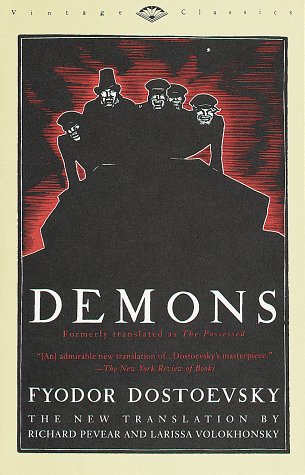
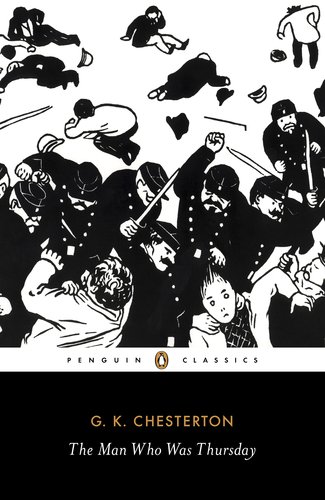
Dostoevsky meets Chesterton
Let’s start with a hefty dose of a few Old World masters of moral-spiritual fiction: Dostoevsky and Chesterton. Think of the deep, dark, and tenacious quest for God in a post-theistic world in the former mixed with the biting, satirical, joyous exuberance, wit, whimsy, farce, fancy, and wildness of the latter. (And, in terms of being predecessors to Lafferty, it is no coincidence that both of these great authors were creative adherents to Christian Orthodoxy.)


American Tall Tale meets Native American Folklore
Does this sound a bit serious and weighty? Well, Lafferty was such. But he is also constantly called ‘mad’, ‘insane’, ‘zany’, and the like. And he has the reputation of making the reader laugh aloud. So much so that the weightiness of his art has not often been appreciated. Chesterton’s influence can certainly account for some of the ‘lunacy’ and laughter. But for his unconventional qualities we must now also mix in the ingredients of American tall tales and Native American myth and folklore: Paul Bunyan meets Coyote the Trickster as it were. Think of the larger than life, hilarious, and gigantesque frontier exaggeration of the former mixed with the sly, wry, tribal, traditional, spiritual, ancient magic and mystery of the latter.

With these two major streams of Old World authors and New World folklore (you might call them ‘high’ and ‘low’ respectively, in terms of ‘register’) you can already see how Lafferty’s is going to be fiction that doesn’t easily fit moulds and that needs very large, wide-open spaces of thought and imagination to breathe and move and play and preach and fight and astound. But we’re far from through concocting this utterly strange brew.


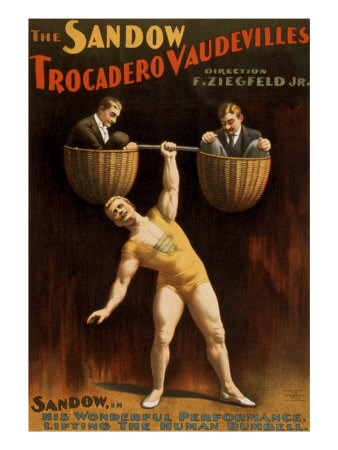
Vaudeville meets Carnival
Keeping in the register of ‘Cowboys and Indians’, bring in the Vaudeville variety show and the Carnival barker. It’s the comedic, popular fun and 'burlesque' (as in absurd parody and exaggeration: there's no striptease in Lafferty's stories) of the former mixed with the freakish grotesquery and weird wonder of the latter—and the call for the audience to participate in both. There's song and dance and feasting and drinking and brawling and bragging a plenty in Lafferty's tales.
Irish meets Greco-Roman
Now let’s reach back to the much older Old World for influences before we finally charge into the latter 20th century context of when Lafferty was actually writing. Lafferty the Oklahoman was of Irish Catholic descent and it shows. The Irish storyteller is in him and he’s often been compared to both Flan O’Brien and James Joyce. You can also hear resonances in the contemporary playwright, Martin McDonagh. There is often even an Irish lilt or brogue to Lafferty’s cadence, syntax, and word choice.

In terms of wording and style and content we must also look back to ancient Greco-Roman sources of all varieties—plays, myths, philosophers, church fathers, politicians, treatises, epics, satires, ‘histories’ and so on. Thoughts and ideas from these ancient sources abound in Lafferty as well as everything else we’ve mentioned up to this point. The Bible and Medieval literature also make their influences felt, adding both a Hebrew and European flavour. And it’s worth mentioning here that there is some Arabic influence to be found also, perhaps mainly from the Thousand and One Arabian Nights and from Muslim culture of the Charlemagne era. From these Old World sources too I think comes Lafferty’s great interest in languages (partly by a working knowledge of which he re-invented the language and syntax of English Literature fiction to suit his own purposes).

American New Wave Science Fiction meets Southwest Regional Fiction
Lastly, we mention not so much influences as context—but a context that very much shaped the contours of Lafferty’s fiction. Lafferty’s fiction emerged mostly in the science fiction magazines of the 1960s among a constellation of ‘New Wave’ writers who were experimenting with new directions in the genre, focusing more on the ‘soft sciences’ of language, psychology, and anthropology rather than the traditional ground of science fiction in the ‘hard sciences’ of physics, technology, and so on. Harlan Ellison and the authors that populated his Dangerous Visions anthologies such as Roger Zelazny and Samuel R. Delany warmly welcomed Lafferty into their midst and praised him almost without qualification and with some genuine awe at the raw potency of his imagination and originality.

Many of these New Wave s.f. authors have a strong feel of the Beat Generation stylisings of the likes of William Burroughs and Jack Kerouac—and you often hear echoes of beatnik and jazz talk in Lafferty, but it is mostly just played with; his real roots are in the aforementioned, which arguably enabled him to out-jazz the ‘cool’ set at their own game.

But ‘cool’ Lafferty was not. He might be mistaken for such at a glance, but he was actually quite a bit older than most of his fellow writers of the time and really was doing something that was strange in a truly bizarre and pungent mode, not just a bit zany in a ‘hip’ sort of way. His experimentation, frankly, went far deeper and was more truly radical and structural, not least by being rooted in and nourished by potent traditions rather than attempting any kind of clean break with the past into a ‘new age’ or ‘summer of love’ or what have you. He was searching for bigger, muskier, shaggier, bloodier, spookier, gladder, subtler game.

One way he wasn’t as ‘hip’ as his contemporaries was by being far more of a ‘regional’ writer, particularly of his native Oklahoma and Southwest region. The open feel of the plains and prairies, of cattle and horses and horns and hooves, of fishing and hunting and living under the open sky, of saloons and ropes and saddles, of bucks and buffalos and bears, of Native Americans and ranch hands and cowpokes and so on, all permeate his fiction. Indeed, I felt so many tactile resonances with Lafferty’s fiction when recently reading Cormac McCarthy’s anti-western novel Blood Meridian. That was really when my eyes were fully opened to Lafferty as a regional writer of the Southwest. This places him, with all his other associations, loosely alongside some of his fellow Catholics who were Southern regional writers like Flannery O’Connor and Walker Percy.


A Ferocious, Generous, Joyous Storyteller
Does all this sound like perhaps a little too much broiling and roiling inside one man, too much for one artistic output? Well, frankly, sometimes it is! Lafferty at his very best (usually in his short stories) has a gemlike quality of concentrated power that swiftly and furiously, but smoothly, weaves and blends and infuses all or most of these streams of influence into an exquisitely coherent piece of art. It is truly awe-inspiring when it comes off. Really. But often his fiction is over-full, bristling, and careening with this background and all his feral genius firing and flailing.

Lafferty's world is one that feels like absolutely anything can happen, and yet it has an underlying coherence and solidity – it’s not a drugged up, tripped out psychedelic fantasia. It’s meaty, earthy, punchy, mythic, transcendent, wry, jokey, gruesome, funny, wily, ornery, amiable, farcical, grave, gritty, grotesque, delightful, magical, realistic, wild, noble, uncanny and canny all rolled into one. Indeed, this makes it something of a minor miracle that he can write an almost-mediocre story now and again (though there’s almost always a memorable wonder in there somewhere). His short story collections are the best place to start before moving on to the usually less cohesive, but equally wonder-filled, novels.

Lafferty can make you laugh harder and think harder than you’re used to, and also amaze your imagination and sense of wonder like few ever will. He called himself ‘the cranky old man from Tulsa’ and yet he fought hard to imbue the world with highly creative and inventive hope for a spiritually renewed present and future, calling all who would hear to join in world-up-building with all their powers and faculties on full throttle. He was a ferocious and generous and exuberantly joyous storyteller who spun out whopping tales at breakneck speed in a tumbling torrent of wild and glad and angry urgency and ecstasy. We are truly blessed to have had him. We must make the most of what we can get hold of.


‘Come on, y’all, this is awesome’
In closing, I want to mention that contemporary giants of ‘alternative’ dark fantasy such as Gene Wolfe and Neil Gaiman have cited Lafferty as a hero and influence. Both Wolfe and Gaiman have attempted to write stories in the ‘Lafferty genre’ (he really did essentially invent his own genre – in many ways he is the Captain Beefheart of American literature).


A few years ago, the New York Times asked the Saturday Night Live comedy actor, Bill Hader (a fellow Oklahoman), what books he recommended and he started his list with R. A. Lafferty’s collection of short stories entitle 900 Grandmothers. I’ll leave you with his apropos words trying to describe the experience of reading Lafferty:

‘It’s hilarious, incredibly funny and at the same time it’s insanely dark… You get such a sense of joy and boundless imagination in every sentence – even if the story doesn’t totally cohere, you feel like it’s about something. It’s so incredibly Tulsa. You get that feeling when you see a Flaming Lips show. It’s not like we’re dark and hurt and twisted. It’s like, “I’ve got blood on my face – come on, y’all, this is awesome.”’


Saturday, June 4, 2011

Tall Tale Pro Wrestling and an Interview With A Genie In A Bottle

Today I discovered Lafferty's short story 'Ifrit' online HERE.

It's from the collection Iron Tears, which I ordered a few years ago and never received. (I've since heard this has happened to others.)

This is one of my favourite short stories by Lafferty I've ever read. It's full of laughter and wonder. No one can tell a tall tale as well as Lafferty. He starts with outrageous 'pro wrestling' scenarios (in which the common notion that 'it's all fake' is used to hilarious effect) and ends up with a lightly but movingly mythopoeic interview with a Genie, conducted within his bottle. The story then finishes on a really weird but characteristically dark and exuberant note with 'lions in the sky'.

I've always strongly suspected that there are more truly astounding gems out there by Lafferty in the remaining collections I still don't own (Golden Gate and Through Elegant Eyes are two more major ones I still need to obtain), not to mention many more in s.f. magazines and anthologies that have never been collected in a Lafferty volume. (E.g. 'In Deepest Glass' and 'Symposium' are two of his best stories and I've never seen them but in the obscure 1970s multi-author anthologies I found them in.) This story proves to me afresh that searching out every last Lafferty story I can find is so totally worth it.

I highly recommend 'Ifrit' - go read it! (It's a fairly short read at only ten pages.) As the story itself says:

'If you are of brave heart as well as honest heart, try it. You have nothing to lose except your own orientation and perhaps your life. And you stand to gain a whole new way of looking at things.'

Indeed, this aptly describes what lays before us in reading any and all of Lafferty's fiction.

Thursday, June 2, 2011

The First-Ever Book of Essays On Lafferty (for which I will contribute a chapter)?!?!

Ok, after about a year's silence on this blog, I'm picking it up again. I'm delighted to report that I've been asked to write a chapter for an upcoming book of essays about the fiction of R. A. Lafferty (the first ever!). This is being pulled together from various sources by Andrew Ferguson (who recently wrote his MA dissertation on Lafferty's carnivalesque world-building narrative strategy - a very lengthy in-depth, technical, and thrilling read!). It may be sometime before the proposed book sees publication and, of course, my chapter will only be included if it 'makes the grade'. But I'm honoured and thrilled to be asked to contribute and to have this opportunity.

The contributors to the book will be looking at Lafferty and his large, diverse, and brilliantly/notoriously unconventional body of fiction from various angles. I've been asked to cover Lafferty as a Catholic/Christian storyteller, sort of an Irish American G. K. Chesterton. He was one of the very best of the 2oth century and puts so much 'Christian art' to shame. I will probably begin by looking at the praise heaped on him by the New Wave s.f. movement from which he emerged and how 'new weird'/'urban fantasy' writers like Neil Gaiman still praise and emulate him, none of whom share his Catholic faith, yet all of whom find a companion, mentor, and inspiration in him.

Then the main body of the chapter will look at how Lafferty's fiction evinces his Christian worldview inventively, invitingly, feistily, and generously, mainly in the short story 'And Walk Now Gently Through the Fire'. But probably also with reference to some elements in the novels Past Master, Arrive At Easterwine, and Fourth Mansions, as well as other short stories like 'In Deepest Glass', 'Symposium', and 'Days of Grass, Days of Straw'.

I'm toward the end of doing a close reading of 'Walk Now' (that I've written previously about on this blog here). This story is about the Queer Fish, who are also called the Ants of God 'for their building proclivities' that are troublesome in an 'unstructured, destructed, destroyed society' (and now you can see where the title of the blog derives from). It is a story full of laughing irony and biting satire that paints a bleak picture of the possibility of 'post-humanity' only to incite a very rowdy hope for redemption, toward which we are urged to build, to reconstruct, to renew. I'll be quoting some passages from it in upcoming posts.

Please feel free to make suggestions of how I ought to tackle this subject!

Sunday, April 25, 2010

PAST MASTER BEER!

Yes, it's true. My next door neighbour (and friend) is, in cooperation with local brewers here in Scotland, concocting a Past Master original beer. I don't know the details yet, but tomorrow I'm supposed to help him to write up the label which will synopsise the book to some degree.

Good times!

Stay tuned for photo documentation. (I think it will debut in a few weeks as part of an art exhibition at a local Glasgow gallery. All will be explained in due time.)

Check Out Proper Lafferty Discussion Below!

Folks, you need to know that a fine fellow called Jay and I are having a stimulating and illuminating discussion on Lafferty in the comments section of the previous post 'Neil Gaiman Presents... Space Chantey'. You don't see much back and forth like this about Laff so come sample some of this rare brew!

Wednesday, March 31, 2010

Neil Gaiman Presents (Vol. 3)... R. A. Lafferty's Space Chantey!

Wh-wh-what? Is it true? What does it mean? Could this revolutionise Lafferty's readership and rescue him from oblivion?

I can confirm that this re-issue indeed appears to be in print!


The rationale behind the series:

'This is the first of 6 collections in the Neil Gaiman Presents line, chosen by Gaiman to represent the origins of his views on classic heroic literature.'

'The Neil Gaiman Presents program will be devoted to returning to print long-unavailable works in affordable paperback editions personally selected by Gaiman. Each book will carry a new introduction by Gaiman, speaking to the reasons why he selected the book for this line, as well as why the book deserves a wider audience. '

I greatly look forward to Gaiman's thoughts on Space Chantey (Lafferty's completely left field take on Homer's Odyssey), urging that it deserves a wider audience!

I was disappointed at first to see that they have retained the original cover of Space Chantey, but then one site says: 'Features art by legendary underground artist Vaughn Bodé!' I looked back through my copy and was reminded that each chapter is headed by an illustration and indeed they're quite cool. (Still don't like the cover though and think it'll be a bit of a put off for some. Then again, my wife loves this cover and she's the visual artist of the two of us and I usually trust her judgment on these matters - she loves a lot of Tim Burton and Edward Gorey, which go right along with the Gaiman aesthetic I think - so perhaps at least his fans will appreciate this cover after all. Believe me, I hope my misgivings about it are unnecessary and unjustified.)

Wednesday, December 16, 2009

A Travelogue of the Laffertian Landscape, part 4: Never was the World Outlook so bright, and never had the girls been so pretty

I didn’t actually own a collection of short stories by Lafferty until several years into reading him. I simply looked for one Lafferty story at a time in s.f. mags and multi-author anthologies of the 70s/80s at second hand bookshops (reminiscent of the title to his story ‘One At A Time’!). I’d buy dirt cheap 70s anthologies that looked interesting, especially if edited by someone I respected, like Brian Aldiss. That’s how I came across the story ‘Parthen’ in Best SF: 1973, edited by Aldiss and Harry Harrison.

This story (built on the momentum of having read the previously discussed ‘And Walk Now Gently Through the Fire’ [see part 3]) did the trick of hooking me completely. A particular part toward the beginning had me laughing uncontrollably, reading one line again and again, each time erupting afresh in giggles and guffaws—tears in eyes, hand slapping thigh—the works. I’ll get to that in a moment. First, the story begins thusly:


'Never had the springtime been so wonderful. Never had business been so good. Never was the World Outlook so bright. And never had the girls been so pretty.'


Lafferty had a real knack for a cracking opening paragraph to a story. Indeed, the story that follows often cannot live up to its gem of an opening. But this story definitely does. In fact, reading through this story afresh I find it is one of his (perhaps somewhat rare) ‘perfectly’ written stories. The prose just does not falter, right through to the end. It is confident and lyrical; the writing produces an exquisitely taut chord that rings true when plucked (read). It may not be one of his very deepest (though it undoubtedly has depth), but it is one of his most finely crafted in my opinion.

(But always remember, whatever encomiums I employ to describe Lafferty, you must ever be prepared for him to live up to the glowing praise in the queerest way when you actually read him for yourself. I’m firmly convinced he was a great writer, but he was a weird writer! A fact which, for people with tastes like mine, only adds to the esteem we heap on him.)

I still didn’t yet realise how characteristic these few opening lines of ‘Parthen’ were of Lafferty’s wry, consistently anti-utopian satire. And that he usually employed ridicule in such magnanimous-yet-cranky terms—that is, he harangued humanely. That’s why so many people love him irrespective of whether they agree with his ethical, religious, or political framework.

I don’t know how he pulls it off, but these opening lines (especially if seen within his wider work) drip with sarcasm and a certain deep cynicism and yet they evince what seems to be Lafferty’s genuine zest for life, even at its worst. It is not life itself or even certain persons or groups of people, but rather the philosophical (and hence, ethical) thinning of the zest that he objects to crankily (he called himself the ‘cranky old man from Tulsa’). But as I say, so many readers who might even be ideologically on the receiving end of his withering criticism find themselves warming to him because of his affirmation of being human and of life, even when facing a darkness, even when accusing you in particular of supporting a structure that creates that darkness. This is his genius. This is what people of all stripes love him for. The story continues:


'It is true that it was the chilliest spring in decades—sharp, bitter, and eternally foggy—and that the sinuses of Roy Ronsard were in open revolt. It is admitted that bankruptcies were setting records, those of individuals and firms as well as those of nations. It is a fact that the aliens had landed (though their group was not identified) and had published their Declaration that one half of mankind was hereby obsoleted and the other half would be retained as servants. The omens and portents were black, but the spirits of men were the brightest and happiest ever.

'To repeat, never had the girls been so pretty! There was no one who could take exception to that.

'Roy Ronsard himself faced it in a most happy frame of mind. A Higher Set of Values will do wonders toward erasing such mundane everyday irritations.'


The ostensibly light humour, the fun-having sarcasm and lampooning of ‘new moralities’, the effortless and unobtrusive introduction into the narrative of a well-worn s.f. trope (‘the aliens had landed’) all combine to create simple, pleasurable entertainment… and no one really suspects (or is only marginally wary of) the bite beneath the ink! And Lafferty just goes on light-footedly satirizing and, indeed, simply joking around:


'There is much to be said in favor of cold, vicious springtimes. They represent weather at its most vital. There is something to be said for exploding sinuses. They indicate, at least, that a man has something in his head. And, if a man is going to be a bankrupt, then let him be a happy bankrupt.

'When the girls are as pretty as all that, the rest does not matter.


Lafferty also had a knack for odd description of odd things and would go into great detail unexpectedly, frequently thereby disclosing his considerable (in the main arcane) erudition. We have been informed that the girls are unusually and perhaps even unbelievably pretty and many an author might leave it at that. But Lafferty’s next line is ‘Let us make you understand just how pretty Eva was!’ And Eva is the first in a rapid succession of lovely women he sketches. And what you would expect to come next? What kind of description in what kind of terms? No one would do it like Lafferty does:


'She was a golden girl with hair like honey. Her eyes were blue—or they were green—or they were violet or gold and they held a twinkle that melted a man. The legs of the creature were like Greek poetry and the motion of her hips was something that went out of the world with the old sail ships. Her breastwork had a Gothic upsweep—her neck was passion incarnate and her shoulders were of a glory past describing. In her whole person she was a study of celestial curvatures.

'Should you never have heard her voice, the meaning of music has been denied you. Have you not enjoyed her laughter? Then your life remains unrealized.


Let me pause and suggest the following exercise to you: some day, once you’ve read and enjoyed Lafferty for a while, try typing out a paragraph you always found humorous. What an effect it has! I grinned as I began. The grin widened into a (probably frightening-looking) smile. Little involuntary giggles began erupting. By the time I was done I was quietly but firmly belly-laughing, shoulders gently convulsing. I had to savour a few of the lines again, then laughed yet louder, sighed. No doubt there was a twinkle in my eye that if my wife or one of my children had entered the room and observed, they would have queried: ‘What mischief have you been up to?’ What a gift to write like that! (C. S. Lewis has wonderful moments where he achieves this and G. K. Chesterton many more.)

Even given that the grandiosity of this praise is necessary to the plot, what a wonderful way to describe the beauty of a woman! A quality I appreciate in Lafferty (and I’m not sure how many others would appreciate this) is that he did not describe graphic sexual scenes (unlike, say, his Catholic contemporary Gene Wolfe), though he by no means shrank from the subject on a number of levels – married, illicit, fulfilling, or unfulfilling. Elsewhere in this connection, Lafferty remarked:


‘Well, well, was there a seduction scene then? Enjoy or abhor such things according to your inclination, as the sage says, but it is contemptible to seek such vicariously.’


(From his novel The Devil Is Dead. He seemed consistently to disdain and subvert society’s appetite for pornography – see, for example, his story ‘Brain Fever Season’ – collected in Ringing Changes.)

As ‘Parthen’ shows, male-female relationships and gender inter-perceptions were often a central feature of Lafferty’s stories. Nor did he shrink from the sensual as I think the above passage shows. Indeed, here is deep respect and true awe in describing a woman’s physical dimensions. And this thus comes across as so original! Every s.f. writer in the 60s/70s experimental New Wave movement was busy gettin sexy and sexually liberated and Lafferty was diverse from them in this area as in so many others. Though he demurred from joining in the sex lib ethos, it’s clear he was no prude and his work regularly celebrated and explored the joys and perils of human sexuality.

And of course not only does this passage have beauty, but also mirth, even joy! Lafferty continues:


‘It is possible that exaggeration has crept into this account? No. That is not possible. All this fits in with the cold appraisal of men like Sam Pinta, Cyril Colbert, Willy Whitecastle, George Goshen, Roy Ronsard himself—and that of a hundred men who had gazed on her in amazement and delight since she came to town. All these men are of sound judgment in this field. And actually she was prettier than they admitted.

‘Too, Eva Ellery was but one of many. There was Jeannie who brought a sort of pleasant insanity to all who met her. Roberta who was a scarlet dream. Helen—high voltage sunshine. Margaret—the divine clown. And it was high adventure just to meet Hildegarde. A man could go blind from looking at her.’


I don’t know why, but I must have read this story over again half a dozen times in as many weeks and would seriously have tears in my eyes by the time I came to ‘the divine clown’ every time! I suppose different bits of Lafferty tickle different people in different ways, but this one just grabbed my funny bone and wouldn’t let go until I was aching every time. Indeed, people often refer to the happiness and joy they feel from reading him, no matter how dark or bloody certain aspects may be.

And Lafferty gives us this joyful pleasure always with a sting in the tail. The wives are understandably not taking it well that their men are all besotted with these new über-women. The protagonist Roy Ronsard says to his wife:


‘“Have you noticed how many really beautiful women there are in town lately, Peggy?”

‘“Roy, I hope those aliens get every damned cucumber out of that patch! The monsters are bound to grab all the pretty women first. I hope they’re a bunch of sadist alligators and do everything that the law disallows to those doll babies.”

‘“Peggy, I believe that the aliens (and we are told that they are already among us) will be a little more sophisticated than popular ideas anticipate.”

‘ “I hope they’re a bunch of Jack the Rippers. I believe I could go for Jack today. He’d certainly be a healthy contrast to what presently obtains.”’


This thought that ‘Jack the Ripper’ would be better than the current lack of ‘manliness’ provides a snapshot of a lot of what Lafferty had to say in his work. His was a (imaginatively) violent reaction to the reductionism(s) of his (and our own?) times – reductionisms that pretended, ironically, to be on a ‘higher plane’ of values. The effects of these values play out this way in the story before us:


‘How could a man not ascend to the higher plane when such wonderful and awesome creatures as these abounded? But the damage was done when the men carried this higher plane business home to their comparatively colorless wives. The men were no longer the ever-loving husbands that they should have been. The most intimate relations ceased to take place. If continued long this could have an effect on the statistics.’


I won’t give away rest of this enjoyable (quite short) story. The light touch continues throughout both in terms of humour as well as social criticism and perhaps this story gives little hint of the sublimities Lafferty can reach. But it is one of my favourites and I think a fine and gentle introduction to the man’s oeuvre.

Next I shall mention a flurry of stories that I came along subsequently with much pleasure and with increasing interest in his critiques of theories of origins among other themes.

Friday, November 27, 2009

A Travelogue of the Laffertian Landscape, part 3: The Ants of God are Queer Fish (And Walk Now Gently Through the Fire)

The next Lafferty story I happened upon was the 1972 ‘And Walk Now Gently Through the Fire’ which the dust jacket to the anthology of the same name somewhat misleadingly calls a ‘chilling dip into the occult’. It was weird; it was surprising; it was effortlessly (unintentionally I reckon!) original; it was tasty and tantalising; like everyone else testifies when they first read him, it was like nothing I’d ever read. And it was overtly Christian! Right here in the middle of other ‘sf masters’ (as the intro claimed, placing Lafferty’s name in their midst) such as Robert Bloch, Roger Silverberg, and Philip Hose Farmer was this wonderfully subversive story that was G. K. Chesterton writing a bizarre science-fictional Screwtape Letters for the freshly and giddily post-Christian, drugged-up, rock-n-roll-institutionalised America! The story begins:

‘The Ichthyans or Queer Fish are the oddest species to be found in any of the worlds.’

If you know where he’s going with it and what he means by it, this in some ways sums up Lafferty’s whole take on things. Already, I was enjoying the taste of the style and was open to an entertaining story about aliens. Anyway, the story continues:

‘They are pseudo-human, perhaps, but not android. The sign of the fish is not easily seen on them, and they pass as human whenever they wish: a peculiarity of them is that they often do not wish to pass as human even when their lives depend on it. They have blood in their veins, but an additional serum also. It is only when the organizational sickness is upon them (for these organizing and building proclivities they are sometimes known as the Queer Builders or the Ants of God), that they can really be told from humans. There is also the fact that most of them are very young, or at least of a youthful appearance. Their threat to us is more real than apparent and we tend to minimize it. This we must not do. In our unstructured, destructed, destroyed society, they must be counted as the enemies to be exterminated. It’s a double danger they offer us: to fight them on their own grounds, or to neglect to fight them. They’d almost trick us into organising to hunt down their organization.’

[Those who know VOTM will see the blatant influence on my lyrics – ok, plagiarism on my part!]
So, this is not a story about aliens after all. Not conventionally anyway. This is a poker-faced but laughing-eyed, satirical but deadly serious tract for the times, and for those with eyes to see it, a ‘religious’ tract at that! And it was couched in freshly self-ironic yet taunting terms like ‘Queer Fish’ and ‘Ants of God’! I was suddenly wide awake and fully engaged, grim-browed and glint-eyed, bent on seeing just where this was going.

Here I face a narrative problem. I want to quote half the story! It deserves a lengthy chapter all to itself in some critical book! So I deem. Let me just try to point out a few more things about this story so as to end this entry and move on to the rest of my Laffertian journey and to thoughts on his wider work.

This opening to the story is one of a handful of something like excerpts from a professional scholarly journal that punctuate the story (a trope Lafferty often uses). At first the ‘scholars’ sound like scary bureaucratic social architects but slowly their identity morphs into demonic personages writing about the much-needed extermination of these pesky Queer Fish and all they stand for. (Hence the Screwtape Letters comparison above.) But immediately it moves on to proper storytelling as well:

‘Judy Thatcher was moving upcountry in a cover of cattle.’

Need I say more? Nobody writes like that! A ‘cover of cattle’? Come on! If that’s not totally awesome I just don’t know what is. This is Lafferty’s Oklahoman/Iowan uncool ‘coolness’. I’m from Indiana, not either of the coasts, so maybe that’s why I get it. But I’m pretty sure I’ve heard plenty of voices from East and West coasts that chime in with approval. Even some Brits. Definitely the Japanese seem to love him. (When you read more Lafferty and watch, say, Japanese animated films, you can probably see quite readily why.)

The cattle are further described as ‘wobble-eyed and unordered’ which is a condition we eventually see has afflicted every living thing on the planet except the birds and the few and scattered Queer Fish. Who’s Judy Thatcher?

‘Judy was a young and handsome woman of rowdy intellect. She had, by special arrangement, two eyes outside of her head, and these now travelled on the two horizons. These eyes were her daughter, travelling now about two miles to the East and right of her on a ridge, and her son moving on another ridge three miles to her left and West. She was a plague carrier, she and hers. All three of them were Queer Fish.’

This is a Chestertonian Hemingway or Steinbeck (or maybe even Louis L’Amour)! But no, it’s Lafferty. Some people seem to get tired of hearing it, but he’s truly one of a kind. (S.f. scholar John Clute: ‘With R. A. Lafferty… comparisons are more than usually misleading. He stood alone.’) Still, approximate and tentative and even facetiously tenuous comparisons can’t hurt. I actually think Laff himself, in describing his own characters or in comments they make, gives us the vocabulary we need to delineate his style. A ‘rowdy intellect’ is one of many such descriptives that captures well the man’s mind. In fact, he later describes Judy writing a letter ‘with great sweeps of writing in a rowdy hand out of a rowdy mind… Yet she wrote with difficulty, for all the free-handed sweep of her writing. There are things hard to write, there are things impossible. She dipped her calamari pen in lampblack and in grace and wrote to somebody or something that might no longer be in existence.’

Bang! There it is for sure. This is Lafferty’s writing very well described indeed and we shall return to this thought in a later entry. But for now just know that he’s a rowdy, sweeping, grace-dipped intellectual of a writer writing things hard to write, and things impossible, perhaps written to someone or something now extinct. If that doesn’t make you hurt inside with a good hurt, sad inside with a good sadness, pierced inside with sweet aching joy, roused inside with glee and grit, well, friend, read on and pray for grace!

Judy’s juvenile son Gregory is presently tempted by a junior demon called Azazel and they’re both a bit embarrassed by it because it’s both of theirs first time and they end up laughing it off a bit. But Gregory does successfully resist temptation in the end and the demon departs a bit miffed, promising ‘The show isn’t over with boy’.

It’s just this sort of matter-of-fact and rather irreverent theological supernaturalism seamlessly woven into his stories that characterises Lafferty’s genius for being theologically orthodox in a contemporarily heterodox manner. That’s why so many non-Christians read him and don’t know whether he’s comin’ or goin’! Whatever pre-beliefs we bring to it, we just eat it up. Why not? Something this good can’t be all bad, can it? I honestly feel sorry for atheists and other ‘unbelievers’ who read Lafferty with pleasure. They must feel so guiltily tempted toward the (to them) dark side! As C. S. Lewis said, ‘a young atheist can’t be too careful what he reads’! Nor can any non-Christian of any age for that matter! I know not everyone sees these theological underpinnings right away. As the aforementioned Encyclopedia of SF notes: Lafferty’s ‘conservative Catholicism has been seen as permeating every word he writes (or has been ignored)’. But I wonder whether readers can really understand or even truly enjoy Laff’s work without coming to some kind of terms with his faith. Again, Clute: ‘unlike almost anyone else in the field, his Roman Catholicism governed not only the surface of his work, but its deep structure as well.’ More on that in later entries. Suffice it to say the dialectic he sets up in the following two paragraphs from later in this story should make the stakes pretty clear:

‘There has been a long series of “Arrow Men” or “Beshot Men” who have been called (or who have called themselves) Sons of God. These Comet-like Men have all been exceptional in their brief periods. The Queer Fish, however, insist that their own particular Mentor “The Mysterious Master and Maker of the Worlds” was unique and apart and beyond the other Arrow men or Comet Men who have been called Sons of God. They state that he is more than Son of God: that He is God the Son.’

But what we’re reading here is another of the demonic-bureaucratic journal entries and it goes on to argue the other side:

‘We do not acknowledge this uniqueness, but we do acknowledge the splendor and destroying brilliance of all these Arrow Men. To us, there is nothing wrong with the term Son of God. There is not even anything wrong with the term God, so long as it is understood to be meaningless, so long as we take him to be an unstructured God. Our own splendor would have been less if there had not been some huge thing there which we unstructured. This unstructuring of God, which we have accomplished, was the greatest masterwork of man.
‘The second greatest masterwork of man was the unstructuring of man himself, the ceasing to be man, the going into the hole and pulling the hole in after him; and the unstructuring, the destroying of the very hole then.’

Hmm… Lafferty seems to be taking us to the future in order to see our present times. Then the devil-scholars show their hand:

‘We who were made of fire were asked to serve and salute those who were made of clay. We had been Arrow Men ourselves. Our flight was long flaming and downward, and now it has come to an end. We destroy ourselves also. We’ll be no more. It is the Being that we have always objected to.’

And this is their sinister-sweet invitation to us all:

‘What, have you not lusted for rotted mind and for rotted meat? Here are aphrodisiacs to aid you. Have you not lusted for unconsciousness and oblivion? You can have them both, so long as you accept them as rotted, which is the same as disordered, or unstructured, or uninstituted. This is the peaceful end of it all: the disordering, the disintegrating, the unstructuring, the rotting, the dry rot which is without issue, the nightmare which is the name of sleep without structure. Lust and lust again for this end! We offer you, while it is necessary, the means and the aids to it.’

Well, it’s ominous to be sure, yet the story ends on an achingly transcendent note, bizarre and completely without banality or cheese or hoaky religiosity. Not a false note is rung. But that’s for a future entry!

Next: I encounter another story, belly-achingly humorous, and find myself hooked for good. The search begins.

A Travelogue of the Laffertian Landscape, part 2: Closing in on the Mad Man Riding (Raucously) the Crest of the New Wave

In my early 20s I discovered science fiction as literature through C. S. Lewis’s ‘Space Trilogy’ (‘Cosmic Trilogy’ in UK) and in my nerdish obsessive tendency proceeded to read s.f. non-stop for 2 or 3 years.
Now I had grown up on sci-fi films and TV and loved the genre, but books-wise had only read fantasy and horror as a child and teen. Furthermore, I was ‘singing’ in a ‘sci-fi/horror’ punk rock band at the time (Blaster the Rocket Boy, later Blaster the Rocket Man). My childhood imagination had readily poured out in my lyrics along with my young-adulthood faith, so that our songs were a strange and heady mix of the spiritual experiences of monsters and robots and aliens. I was a huge C. S. Lewis fan (reading his Mere Christianity at age 18 genuinely changed my whole life, especially by finally fully switching on my intellect and effectively and thrillingly meshing it with my imagination and faith) and I was writing science-fictional lyrics from a Christian worldview but still hadn’t read his science fiction books! A dear friend finally posted me the books in the mail and prompted me to read them, which yet again changed my life.

I must admit, though, I look back on those 2 or 3 years of slavish voracious s.f. reading with some nausea. It was mostly tripe, sadly (I wasted some precious hours of my life on the revered Asimov – but bless him, he’s a classic in his way and is still highly pleasurable in the rare story—reading ‘The Bicentennial Man’ aloud to my children was a fine moment).

However, I think what I mostly identified with then (and still do sometimes) was a phase in s.f. history called the ‘new wave’ in the 1960s and 70s. The hotties of this loose grouping were Roger Zelazny, Samuel R. Delany, and Harlan Ellison in America (gotta love those names!). Apparently it was Brits like Brian Aldiss and J. G. Ballard that started the literary trend in this experimental direction. Philip K. Dick would go here as well and I’m sure there are others I’m glaringly overlooking. It was particularly some of the feel from Ellison and Zelazny that grabbed me, and even more so Aldiss drew me into his flame for a period. There was a quirkiness and ‘coolness’ and ‘science fantasy’ (in the good way) feel to the Americans. Aldiss had their oddity but with the much more articulate and patently intellectual tone usually ingrained in British writing (which for most of my life I by far preferred – I’ve now come to appreciate quite acutely the American style of intelligent prose as well).

In this period (the 60s/70s, as well as my phase of reading this work, which was the mid-90s) there emerged another American author that surely by default of name had to align with this grouping: one R. A. Lafferty. Initially he has the same quirky feel (not as ‘cool’ though, the first thing to set him apart), the oddity, the wry wit and wisdom. Indeed, all of the aforementioned authors praised Lafferty without exception or qualification. Here’s what they were saying about his first (and most well known) novel, Past Master, in 1968 (a novel I didn’t read until much later in my Lafferty experience).


You can hear the genuine admiration mixed with bemusement about how to praise a genius even stranger than themselves who had popped up in their midst:

I read it in one sitting; I couldn’t put it down. Lafferty has the power which sets fires behind your eyeballs. There is warmth, illumination, and a certain joy attendant upon the experience. He’s good. [Roger Zelazny]

This is a great galloping madman of a novel, drenched in sound and color… As with everything the man writes, the wind of imagination blows strongly… and we can settle back to appreciate the special magic proffered by the madman Lafferty. [Harlan Ellison]

The Lafferty madness… is peppered with nightmare: witches, lazarus-lions, hydras, porsche’s-panthers, programmed killers that never fail, and a burlesqued black mass. One hears of black comedy? There are places in PAST MASTER where humor goes positively ultraviolet. [Samuel R. Delany]

…wild, subtle, demonic, angelic, hilarious, tragic, poetic, a thundering melodrama and a quest into the depths of the human spirit… R. A. Lafferty has always been uniquely his own man. [Poul Anderson]

It’s a minor miracle that a serious philosophical and speculative work should be written so colorfully and so lyrically. There is, happily, no way to categorize the book: it has elements of science fiction, of pure fantasy, of poetry, of historical fiction; it is sharply critical and marvellously gentle; very serious and irrepressibly funny; profoundly symbolic and gutsy-realistic by (unexpected) turns. A first rate speculative work. [Judith Merril]

Yet he transcends his peers, he transcends. I don’t mean to be patronizing to clearly great writers who went on to much more renown than Lafferty ever knew. But I think even they knew they were in the presence of someone truly in a league of his own, even if that distinction pushed him into the realm of the ‘mad’ and ‘wild’ like an animal-skinned prophet in the desert.

I first happened upon one or two of his stories in old s.f. mags I had collected second hand and certainly the name stuck if no other impression was made. (I do remember the ending of a story I was otherwise not impressed with, something about a witch making a chilli recipe, that totally made my heart thud against its cage with painful yearning – it utterly surprised me, but it didn’t yet shock me out of my stupidity for I didn’t at that time take up the quest for more Lafferty.) Then I came across the entry on Lafferty in the Encyclopedia of Science Fiction (edited by the brilliant scholar John Clute). Yes, I know, it’s utterly geeky to own such a tome, but honestly it’s actually high quality lit. crit.! I bought the encyclopaedia in the heat and height of an obsession for ‘Inklings’ style imaginative literature when I noticed it had interesting lengthy entries on all three (Williams, Lewis, Tolkien as well as predecessors Chesterton and MacDonald)! Anyway, it mentioned that Lafferty’s Roman Catholicism infused all his writing and I was intrigued on that count. Theologically driven s.f. is rare indeed (particularly by Christians), but is perhaps the most precious jewel worth digging up and collecting. And if you’re gonna dig, dig Lafferty!

Next: I properly encounter my first Lafferty story. It takes a minute to say, so please forgive the long entry…

A Travelogue of the Laffertian Landscape, part 1 – How to Be a Joyously Subversive Blessing Instead of a Hackneyed Subcultural Blight

R. A. Lafferty is a truly great, largely unknown author who deserves the ‘devotion’, attention, and thoughtful reflection. That alone makes this series worth it. These are very early days indeed for Lafferty criticism, so we’re far, far from having too much written about him.

These entries are also incidentally and unavoidably autobiographical and hence at times insightful into my mind, for those interested (you sick people!). (I assume this will mainly be ‘fans’ of Blaster the Rocket Man and Voice of the Mysterons. But some friends, co-workers, neighbours, and family members may also benefit in better understanding their weird half-overbearing, half-reclusive, alternately affable and recalcitrant, bearded bespectacled acquaintance. On the other hand, it may confirm your fears and suspicions and rouse you to unite and take up your torches and pitchforks to finally rid the village of the vile fiend!)

Furthermore, and very importantly, to write about Lafferty is, for me, necessarily a socio-cultural commentary/exploration on a ‘way forward’ for Christian artists: how to be a joyously subversive blessing instead of a hackneyed subcultural blight.

Christians have a long history of being profound and provocative culture-makers: I mainly think of literary innovators like Edmund Spenser, George Herbert, John Bunyan, John Milton, George MacDonald, G. K. Chesterton, Charles Williams, C. S. Lewis, J. R. R. Tolkien, Flannery O’Connor, Walker Percy, and Gene Wolfe (just to name a few that spring to mind). In modern/postmodern/post-postmodern times this tradition is largely lost within huge swathes of the broad Christian church. Hearing comments (from critics who did not share Lafferty’s faith) like the below about an artist who is a self-professed ‘public’ Christian gives me conviction and hope and… ideas:

R. A. Lafferty is one of the most original writers in science fiction. He bends or breaks normal story restrictions apparently at will, pokes fun at serious matters and breaks into a kind of folk-lyricism over grotesqueries. All this, plus the most unfettered imagination we’ve enjoyed in years. [Terry Carr]

R. A. Lafferty is possessed—a madman, a wild talent… Lafferty’s world is not always comfortable, since he takes particular delight in subtly twisting the meanings of words. His world is usually delightfully absurdist, and often bristling with pins to prick the soap-bubbles of whatever you hold sacred. Lafferty is fun, sophisticated, and utterly insane. [A Reader’s Guide to SF]
Too often the label ‘Christian’ in many people’s minds cannot go in the same category as ‘original’, ‘breaking normal restrictions’, ‘fun’, ‘grotesque’, ‘unfettered imagination’, ‘mad/insane’, ‘wild’, ‘subtle’, ‘twisting’, ‘delightful’, ‘absurd’, ‘bursting sacred bubbles’, ‘sophisticated’, etc. Admittedly, a Christian embodies many of these descriptors only in certain senses and sometimes in ways that are dangerous and/or hilarious. But to fail to live out the connections between Christian history, experience, and belief and these ‘edgy’, unconventional signifiers is to sell out the true story of what this social, cultural, philosophical, ‘religious’ revolution called Christianity is all about. The faith’s origins (to say nothing of the faith’s Founder) are, historically, nothing if not in some ways well described by the adjectives above. Look into it if you doubt me.

You see, Christian Orthodoxy is frankly unorthodox. Art created from a community soaked in this tradition and trajectory simply must reflect this untameable character or else inherently deny the soil it grew in and show itself to really be the product of some more arid agriculture.

Not all my readers will readily appreciate this ‘faith and art’ element in the entries to follow. But the discussion is by no means limited to this; it is simply an inevitable component of the larger investigation into Lafferty’s work. I think anyone from any pre-commitment can enjoy and benefit from an honest assessment of the work of such a great author. (It is worth noting that we all exercise ‘faith’, not just ‘religious’ types. We all have unprovable ‘ultimate commitments’ [just name yours and then try to prove them] which we may have good or bad or no reasons for trusting, but we do trust them nevertheless. They are discussable, testable, alterable – but they are finally matters of an act of faith. I hope you can see that this is the case. Obviously, please feel free to argue to the contrary.)

Next: my personal story of discovering Lafferty.

A Travelogue of the Laffertian Landscape, part 0 – Reading Lafferty like watching Flaming Lips perform live, says Comedian

Let’s start with something recent, mainstream, and hip (for the kids) to show the ongoing (albeit underground) influence of Lafferty on pop-sub-counter-culture: a comedian from Tulsa, Oklahoma (Lafferty’s home also) likened Lafferty’s fiction to a live gig of the Flaming Lips:

In the New York Times, Jan. 31, 2008, Bill Hader (‘29-year-old actor and comedian of “Saturday Night Live” and “Superbad” fame’) said the following about Nine Hundred Grandmothers, a short story collection by R.A. Lafferty: [The quote you can't read from Neil Gaiman on this picture of the book cover runs: 'The funniest, oddest short stories in this, or any other, world. Lafferty was a madman who made myths, a true American treasure.']

'It all goes back to Neil Gaiman. In the foreword to “Fragile Things,” he wrote that his short story “Sunbird” was his way of trying to write his own R.A. Lafferty story. So I found “Nine Hundred Grandmothers,” and it’s like nothing I’ve ever read before. It’s very blue-collar science fiction – all the familiar tropes of people going to outer space and to other planets. It’s hilarious, incredibly funny and at the same time it’s insanely dark. You get the feeling like it’s a guy just writing to amuse himself: “I don’t care if any of this makes sense, but I want to see weird stuff happen.” One of his stories starts off, “He began by breaking things that morning.” There’s a short story called “Ginny Wrapped in the Sun,” and it’s just about this little girl who’s super strong, running around, picking things up. You get such a sense of joy and boundless imagination in every sentence – even if the story doesn’t totally cohere, you feel like it’s about something. It’s so incredibly Tulsa. You get that feeling when you see a Flaming Lips show. It’s not like we’re dark and hurt and twisted. It’s like, “I’ve got blood on my face – come on, y’all, this is awesome.”'

Let me just single out some of the sentences there as they so aptly sum up Lafferty’s work:

It’s hilarious, incredibly funny and at the same time it’s insanely dark.

You get the feeling like it’s a guy just writing to amuse himself: “I don’t care if any of this makes sense, but I want to see weird stuff happen.”

You get such a sense of joy and boundless imagination in every sentence – even if the story doesn’t totally cohere, you feel like it’s about something.


And of course, the hilarious kicker:

You get that feeling when you see a Flaming Lips show. It’s not like we’re dark and hurt and twisted. It’s like, “I’ve got blood on my face – come on, y’all, this is awesome.”

It’s always good to hear someone use the word ‘joy’ in describing Lafferty. There’s dark humour, light humour, gentle humour, acidic humour, crankiness, generosity, prophetic insight, philosophical speculation, bizarreness, wildly warped physics and psychics, bloodshed, charm, ordinary friendship, cosmic conflict, and much more. But to miss the abiding joy underscoring so much of it is a big and disastrous miss. In this connection Lafferty’s more famous science fiction contemporary, Roger Zelazny, is often quoted:

Lafferty has the power which sets fires behind your eyeballs. There is warmth, illumination, and a certain joy attendant upon the experience. He’s good.

I’ll talk in subsequent posts about the fact that ‘you feel like it’s about something’. Hope this begins to whet some appetites. Next: some brief reasons why this is worth writing and reading before we get into the discussion proper.

Bonus: here’s a snippet of what the above-mentioned Neil Gaiman (English author of science fiction and fantasy short stories and novels, graphic novels, comics, and films, notably the 2007 films Beowulf and Stardust) says about Lafferty (from the obituary in the Washington Post, April 4, 2002):

He was a genre in himself, and a Lafferty story is unlike any story by anybody else: tall tales from the Irish by way of Heaven, the far stars and Tulsa, Oklahoma.

Thursday, November 26, 2009

Laffertian Bloggers Unite!

Why is there not an entire alternate blogosphere dedicated to this man and his work?!?! Let this be a start...
'It was all strong talk with the horns and hooves still on it.'
(R. A. Lafferty, The Devil is Dead)