Showing posts with label Andrew Ferguson. Show all posts

Monday, January 12, 2015

Lafferty News (Issue 3!)

Okay, it’s unfortunate I haven’t been able to keep up with this more regularly because there have been regular, sometimes weekly, developments.  Here’s what I can remember, starting with the newsworthy item most recent and biggest:

  • Centipede Press have announced the release of Volume 2 of their Lafferty Library:  The Man with the Aura (introduction by Harlan Ellison).
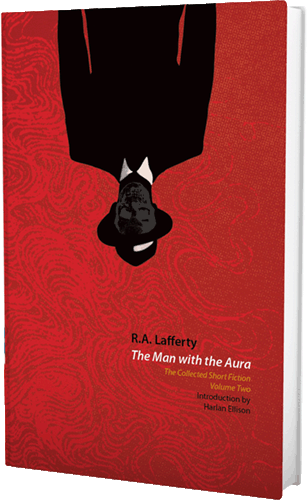

(I gotta say, I like this cover for the second volume a LOT better than the cover for the first.)

Interestingly, they've also announced a second limited run of Volume 1: The Man Who Made Models.  So if you're kicking yourself for not getting it the first time round, you've been granted a second chance:  http://www.centipedepress.com/home.html.


Says Kevin:
Deadlines:
  • Expression of Interest: Saturday, January 31, 2015
  • Content complete: Friday, February 20, 2015
  • Publication: Saturday, March 18, 2015
Contact:
Email editor@feastoflaughter.org with all your ideas, submissions, stories, daydreams of things you'd love to write about R. A. Lafferty, and even requests.

  • If you didn’t see Andrew’s photos of the Lafferty piece in This Land, you’ll wanna check those out.  I would love to see Lafferty more and more often in contemporary journalistic print like this.

  • Lafferty’s short story ‘What’s the Name of That Town?’ (1964) was mentioned last week on a WNPR news radio program summary:  ‘It's a brilliant story on a number of levels and one of those levels has to do with the impossibility of suppressing historical records.’  (The radio program was about ‘historical deletion’, a theme indeed dear to Lafferty.)

  • It was pretty exciting to see Lafferty’s lesser known story ‘Thieving Bear Planet’ included on the Electric Literature website in an article entitled ‘31 Fairly Obscure Literary Monsters’. (It was a Halloween piece, but I didn’t see it until after I’d posted Issue 2 of Lafferty News in November.)  It was also amusing to see that they used a picture of the ‘Ro-Bear Berbils’ from the Thundercats cartoon.  When I saw the Berbils on an episode of the new Thundercats series a few years ago, I was immediately put in mind of the creatures in Lafferty’s ‘Thieving Bear Planet’.  Seems I’m not the only one!
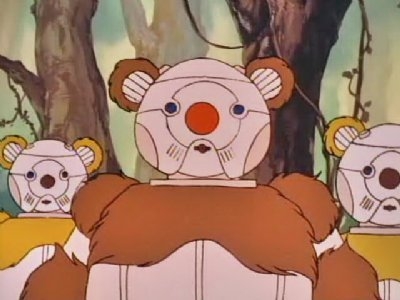
Thieving-Bears-Actually-Thundercats.jpg

  • Andrew Ferguson also announced that his article for the scholarly journal Science Fiction Studies went live in November.  This is only the second ever peer-reviewed academic essay on Lafferty, the last one from 1983.  Andrew’s fascinating article is entitled ‘R.A. Lafferty's Escape from Flatland; or, How to Build a World in Three Easy Steps’ and draws on the work of Paul Ricoeur.  I’ll do a full review of it at a later point.


  • Andrew himself made Lafferty news by being included in the ‘Bright Young Collectors’ series in Fine Books Magazine for his extensive Lafferty collection, one to make the rest of us drool and contemplate burglary.  Mr. Ferguson even came out from behind the scholarly curtain to allow a fine photo portrait of his person to go public.
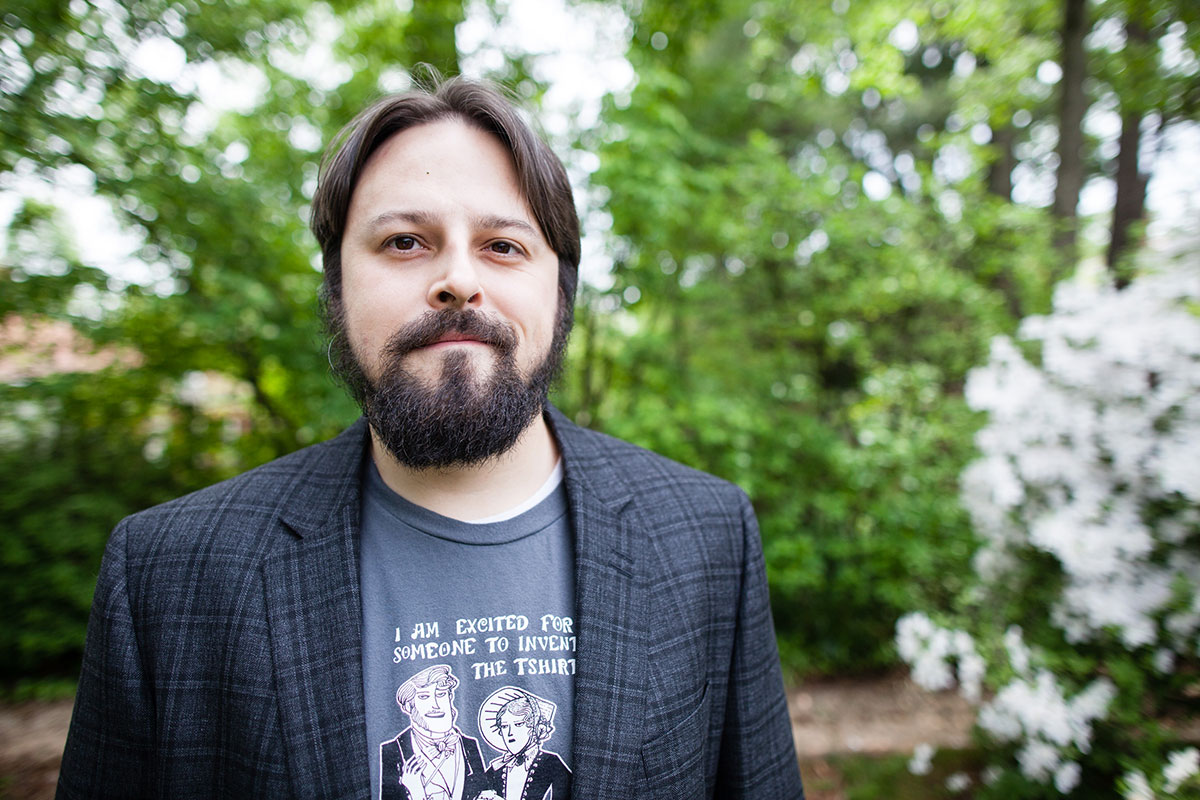
andrew ferguson photo.jpg

  • It’s worth noting that the indefatigible and skilled Rich Persaud is always updating and innovating the ralafferty.org website in a number of ways.  My favourite and most-used aspect of late is that now the title of every single published Lafferty story is listed in chronology of first publication, with the ability for anyone to comment on each story - a function I have availed myself of several times now and urge the rest of you to go and do likewise.  This is a very easy and permanent way for the Lafferty community to really get busy with the joy of discussing his works.  Every type of comment is welcome and appropriate, from simple exclamations of ‘this is one of my faves!’ or ‘I never liked this one’ to more in-depth commentary and analysis.

There is also a page that lists Lafferty’s own favourite stories, at least the ones he mentioned were personal favourites in interviews - with a few quotes from the man himself about this.  Very intriguing.  There’s a page devoted to listing out the books that Lafferty was known to have possessed in his personal library, usually with a comment or two from Lafferty about each book.  This is updated at intervals when new information on the matter is obtained.  And there’s a page with a working timeline of Lafferty’s life.  And there’s more, but you must explore!

  • In my own personal Lafferty-related news, I’m happy to report that I’ve received an offer from the University of Glasgow to start a PhD on Lafferty this October.  It will develop the topic of the Honours Dissertation that I’m writing this semester on the ‘ecomonstrous’ aesthetic in Lafferty and Cormac McCarthy.  Now to find some funding!  If any of you know of some Lafferty Studies scholarship that I’ve somehow overlooked, please let me know!  I’m sure they’d be happy to fund the first-ever doctoral thesis on Lafferty, right?

There have also been a number of Lafferty book and story reviews on various blogs in the past few months as well, but I’m going to do a separate blog post on those.  Please let me know of any news I missed!  (I’ll try to do these more frequently so they won’t end up as long and involved as this one.)

Sunday, August 17, 2014

Lafferty news (that’s right, NEWS!) – Reminiscent of a Future

All great smells […] have a reminiscent element, but with this it is reminiscent of a future.  There is a pleasurable mustiness here, that’s sure, but it isn’t of a past time:  it’s of a future time, long waiting, and now beginning to unfold suddenly.
-R. A. Lafferty, ‘World Abounding’ (1971)

There is indeed a whiff of something approaching in the air.  Lafferty’s breakthrough into a larger audience has been ‘long waiting’ and seems as if indeed it may be about to ‘unfold suddenly’ in this the centenary year of his birth.  Neil Gaiman has been talking about him a lot in podcasts recently, so much so that Lafferty’s name made it into a Wall Street Journal blog alongside Flann O’Brien.  Just scant weeks after this brief article appeared, another more lengthy news piece was featured in The Guardian this past week devoted exclusively to Lafferty, citing again Neil Gaiman and also ‘our own’ (as I like to think of him) Lafferty scholar, Andrew Ferguson.  This Guardian article is currently being repeatedly tweeted on Twitter and no doubt other social media networks.  The article comes out in conjunction with the Lafferty panel  (hosted by Ferguson and featuring Michael Swanwick) that was held last week at the London WorldCon. 
In my own Lafferty news, I recently started an RALaffertyTweets account on Twitter that has garnered 80 followers in just a few weeks (seems a lot for such an obscure writer).  I started it because I have been officially approved to write my dissertation this year on Lafferty (more on that in the next blog post), but it has come in handy as this article on Lafferty has broken.  
All in all, it seems like exciting and auspicious times for all things Lafferty.  The following from Lafferty’s story ‘The Wooly World of Barnaby Sheen’ (1973) comes to mind:

“Get ready for it, kids, don’t miss it!” Mary Mondo chirped so clearly as to be heard by every ear in the room. “This is going to be good.”
But, of course, Mary Mondo is a ghost and most of the time the people around her only slightly hear her, if at all.  One can’t help but feel that this potential breakthrough for Lafferty’s work is profoundly promising, but also precarious.  This moment of wider recognition for Lafferty feels a bit like the uncertain cliff-hanger endings to so many of his tales (e.g. ‘Frog On the Mountain’, ‘The Configuration of the North Shore’, Annals of Klepsis, Serpent’s Egg).  But I’ll gladly take the expectant stance of the ending of his seminal 1968 novel Past Master:

Remember it?  Then it happened?
Be quiet.  We wait.
[…]
Well, does it happen? Does the reaction become the birthing? What does it look like?
Will we see it now, in face and rump, the new-born world?

Be quiet. We hope.
(artwork for Past Master by Leo and Diane Dillon)

Tuesday, April 1, 2014

Lafferty as writer of Mystical Slashers

They'd kill the Stutgards first, that very night, with axes.  They'd axe old man Stutgard, and all the blood would run out of his big red neck.  They'd cut off Mrs. Stutgard's head that was round as a pumpkin, and it would roll down to the bottom of the hill and look at you.  They'd kill the Stutgard kids.  It's most fun to kill kids who are just enough bigger than you to make it interesting.

-R. A. Lafferty, The Reefs of Earth (1968)

What has been a slow-dawning thought for a while now coalesced for me on a walk this morning:  Lafferty wrote slashers.  Once you say it plain and simple like that, you then, of course, have to qualify it to death. But let's leave the qualifications and nuances for another time.  I'm re-reading The Reefs of Earth right now, which is one of Lafferty's blatantly bloodiest tall tales, a backwoods murder-spree told through a loose-fisted science fiction trope (the killers are alien children who look a lot like human children).  But it's not just this famously murderous early novel.  It has occurred to me that almost every one of Lafferty's published novels (and a significant number of his short stories) involves attempted (and eventually successful) murder as a crucial element of the story arc (this is often in the form of politically motivated and often state-sanctioned assassinations).  Such killing all by itself, of course, only nudges these works into the murder mystery or crime story (a genre Lafferty assayed in a number of tales, including some yet-to-be-published novels).  But anyone who has read more than a few Lafferty stories will know full well that he goes way beyond mere depiction of a murder, even a grisly murder.  His tales are often soaked in buckets of blood and gore.

To throw out some of the more conspicuous specimens from his short fiction, there are  'Snuffles', 'Once On Aranea', 'Days of Grass, Days of Straw', 'Thieving Bear Planet', 'Jack Bang's Eyes', 'The Last Astronomer', and 'Happening in Chosky Bottoms'.  (Lesser specimens could include 'Camels and Dromedaries, Clem', 'Name of the Snake', 'The Hole On the Corner', 'The Man Who Never Was', 'Cliffs That Laughed', 'Frog On the Mountain', 'Ride a Tin Can', 'Sky', 'Groaning Hinges of the World', 'Ishmael Into the Barrens', 'And Walk Now Gently Through the Fire', 'And Mad Undancing Bears', 'Endangered Species', 'Fog in My Throat', 'Smoe and the Implicit Clay', 'The Hand With One Hundred Fingers', 'Thou Whited Wall', 'Splinters', 'The Funny Face Murders', and 'The Ninety-Ninth Cubicle' - each of which depicts grisly death or graphic violence, even if it's not as pervasive as in other stories.)

But it is probably mainly in his novels that one encounters the most gory, slashery stuff.  In fact, those of you who have read the novels can go back and re-read them with this theme in mind.  I think you'll be surprised how much of the bloodshed and killing you may have forgotten.  The quote above from Reefs is one of the tamest samples.  (Okay, I'll add in a nuance here:  a lot of the time it may be more accurate to say that Lafferty practiced a lot of literary gore rather than slasher stuff per se.  There are some really bloody scenes that don't have anything to do with persons murdering other persons - e.g. the wildly gory slaughter of the devil fish in Past Master, or the blood-spattering high-fall deaths from wrestling with God in 'Days of Grass, Days of Straw'.  But the depiction of gruesome bloodshed remains central.)

Now why call all this violence 'mystical'?  Lafferty seems to have had a sort of death-vision through which he saw the world in bloody-rosy hues.  I add 'rosy' to that characterisation on purpose.  How does such a bloody-minded author also fill us with so much joy and laughter, sometimes even as we cringe at horrific maiming and death scenes?  It's partly because Lafferty is almost always funny or wry.  He can't write anything it seems, no matter how dark, without at least a wink.  This often means that the more violent and grotesque the matter, the more hilarious (sometimes uncomfortably so) it comes across to us.  So Lafferty's work is grotesque in the comedic and carnival sense.  'I Think I Will Dismember the World With My Hands' is a chapter title in Lafferty's celebrated novel Fourth Mansions (1969) and it could be an artist's statement for Laff.  Andrew Ferguson has argued persuasively that Lafferty's practice of literary dismemberment is an artistic strategy of taking apart the science fiction genre in order to put it back together again 'renewed and revealed' in 'new potentiality' (Lafferty and His World, page 29 and following).

It is very much this and it is also very much more also.  Lafferty's comedic-grotesque slasher fiction is mystical because it exemplifies his deeply held convictions.  Comedy and laughter are huge central worldview categories for Lafferty.  He can't bring himself to flinch from writing bloody murderous horror, but nor can he bring himself to not laugh at it as well - and his laughter is ontological.  He's laughing because he thinks there's something more real than grisly horror and brutal death.  He has probably tricked you into laughing at that level too.

It seems that Lafferty just couldn't see death as termination, not finally.  Death was more of a waystation than a terminal for Lafferty.  Characters (even whole planets and the cosmos itself in Lafferty's stories) go through death on their way to something else.  Sometimes this is pretty jokey and immediate, such as when a just-severed head keeps talking and is placed at the prow of a boat in order to navigate raiders to other villages to pillage ('Groaning Hinges of the World'), or when a group of astronauts are slaughtered by their hosts on a planet only to regain life the next morning and be invited to enjoy the slaughter all over again as the day's entertainment (that's a rough remembrance of a long-ago reading of Lafferty's 1968 novel Space Chantey).

But often, neither narrator nor reader are privy to what-comes-next. Lafferty simply tells us that a resurrection, a new birth, a new creation is probably in the offing thanks to this bloody death we have witnessed--personal, communal, planetary, or cosmic.  He leaves the story open-ended on that score.  It's up to the reader whether she'll participate in the hushed anticipation that Lafferty enjoins, for example, at the end of Past Master (1968), when the narrator asks whether the destruction of the world will result in its rebirth and answers:  'Be quiet.  We hope.'

The carnival hope in Lafferty is not mere slapstick, however, as many of the deaths depicted are quite poignant and tragic ('Ride a Tin Can' is an obvious example; another for me is the intelligent talking elephant in Laff's 1987 novel Serpent's Egg).  Lafferty is aware of the big ask he is making of the reader:  to laugh even through the tears.  Indeed, to laugh in outright defiance of ultimate tragedy and sorrow (see his ending of 'I Don't Care Who Keeps the Cows' as one instance of a direct depiction of laughter as subversive resistance - a story that contains amusingly grotesque surgical body-horror as its main trope).

Well, this post is just a first stab (wink) at this theory about Lafferty.  I'll have to come back to it and more thoroughly evidence it for a start - a very fun task if you like totting up and citing deliciously gory scenes. Please let me know what you think.  Agree?  Disagree?  Have you noticed all the bloodshed and if so, what do you make of it?

Related:

Cosmic Horror vs. Cosmic Laughter (Lovecraft vs. Lafferty)

Thursday, April 18, 2013

'an exhilarating statement of intent from a young and ferociously talented writer'

'Among the (numerous) apocryphal stories about Lafferty is this one: like many young, bookish folks, he set out at one point to be a writer, even enrolling in a night class to augment his part-time study in electrical engineering, as well as the innumerable languages he taught himself. The writing teacher took a look over his stuff and told him, you might have something here, but you need to go live your life for 20 years or so, and then come back and try it again. Being a literal minded person (something I’ll explore further later on), Ray took the prof at his word and put aside his typewriter for a couple decades. Nothing survives from this earlier period—nothing, that is, except this unpublished novel,Antonino Vescovo, dated in Lafferty’s hand “ABOUT 1935 TO 1937”.'

-from the Lafferty blog Continue on Next Rock 

Andrew (the blogger of said blog) sums up:  'It is, in many ways, an exhausting book; certainly not one to read in a single sitting. But it’s also an exhilarating statement of intent from a young and ferociously talented writer; albeit one, like O’Brien, well ahead of his time.' 

(In his subsequent blog post, Andrew relates another fascinating detail of Lafferty's writing apprenticeship:  '1957 was the year when R.A. Lafferty returned to writing after a twenty-year hiatus. He submitted stories to several magazines (all rejections), enrolled in and completed a correspondence writing course, and also sent several stories to dubious fee-charging literary agencies in the hopes of gaining representation.')

Wednesday, March 27, 2013

Stop Reading this and Go See The REAL R. A. Lafferty Blog!

Continued on Next Rock (this is the link to the blog - click on it without delay!)

I don't have words for how exciting this is.  The author of this blog is Andrew Ferguson.  He is the first person to write a scholarly paper on Lafferty and he is due to be Lafferty's first biographer relatively soon.  (The biography to be published within a few years from now, I believe.)  I know first hand from reading his academic works on Lafferty and from email correspondence and from his contributions to the discussions on this fan-blog that there is no living person who knows as much gritty, juicy, exciting detail about Lafferty's life and bibliography than this dedicated young scholar.  He is also the foremost interpreter of Lafferty, performing highly sophisticated academic pyrotechnics in his scholarly papers on Lafferty.  They will make your head spin with their intellectual rigour and utterly delight you with the insight and enlightenment they bring to a reading of Lafferty's hyper-exotic and ultra-inimitable fiction.

I'm sorry I've kept you so long with my paltry recommendation!  Go forth from here and read the REAL Lafferty blog...

Continued on Next Rock...


[it's the same link twice - for emphasis!]

Raphael Aloysius Lafferty (1914-2002) 
'It was all strong talk with the horns and hooves still on it.'
(R. A. Lafferty, The Devil is Dead)