Monday, January 12, 2015

Lafferty News (Issue 3!)

Okay, it’s unfortunate I haven’t been able to keep up with this more regularly because there have been regular, sometimes weekly, developments.  Here’s what I can remember, starting with the newsworthy item most recent and biggest:

  • Centipede Press have announced the release of Volume 2 of their Lafferty Library:  The Man with the Aura (introduction by Harlan Ellison).
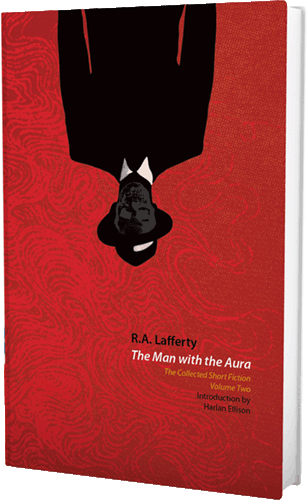

(I gotta say, I like this cover for the second volume a LOT better than the cover for the first.)

Interestingly, they've also announced a second limited run of Volume 1: The Man Who Made Models.  So if you're kicking yourself for not getting it the first time round, you've been granted a second chance:  http://www.centipedepress.com/home.html.


Says Kevin:
Deadlines:
  • Expression of Interest: Saturday, January 31, 2015
  • Content complete: Friday, February 20, 2015
  • Publication: Saturday, March 18, 2015
Contact:
Email editor@feastoflaughter.org with all your ideas, submissions, stories, daydreams of things you'd love to write about R. A. Lafferty, and even requests.

  • If you didn’t see Andrew’s photos of the Lafferty piece in This Land, you’ll wanna check those out.  I would love to see Lafferty more and more often in contemporary journalistic print like this.

  • Lafferty’s short story ‘What’s the Name of That Town?’ (1964) was mentioned last week on a WNPR news radio program summary:  ‘It's a brilliant story on a number of levels and one of those levels has to do with the impossibility of suppressing historical records.’  (The radio program was about ‘historical deletion’, a theme indeed dear to Lafferty.)

  • It was pretty exciting to see Lafferty’s lesser known story ‘Thieving Bear Planet’ included on the Electric Literature website in an article entitled ‘31 Fairly Obscure Literary Monsters’. (It was a Halloween piece, but I didn’t see it until after I’d posted Issue 2 of Lafferty News in November.)  It was also amusing to see that they used a picture of the ‘Ro-Bear Berbils’ from the Thundercats cartoon.  When I saw the Berbils on an episode of the new Thundercats series a few years ago, I was immediately put in mind of the creatures in Lafferty’s ‘Thieving Bear Planet’.  Seems I’m not the only one!
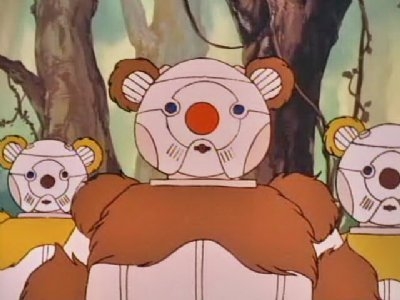
Thieving-Bears-Actually-Thundercats.jpg

  • Andrew Ferguson also announced that his article for the scholarly journal Science Fiction Studies went live in November.  This is only the second ever peer-reviewed academic essay on Lafferty, the last one from 1983.  Andrew’s fascinating article is entitled ‘R.A. Lafferty's Escape from Flatland; or, How to Build a World in Three Easy Steps’ and draws on the work of Paul Ricoeur.  I’ll do a full review of it at a later point.


  • Andrew himself made Lafferty news by being included in the ‘Bright Young Collectors’ series in Fine Books Magazine for his extensive Lafferty collection, one to make the rest of us drool and contemplate burglary.  Mr. Ferguson even came out from behind the scholarly curtain to allow a fine photo portrait of his person to go public.

andrew ferguson photo.jpg

  • It’s worth noting that the indefatigible and skilled Rich Persaud is always updating and innovating the ralafferty.org website in a number of ways.  My favourite and most-used aspect of late is that now the title of every single published Lafferty story is listed in chronology of first publication, with the ability for anyone to comment on each story - a function I have availed myself of several times now and urge the rest of you to go and do likewise.  This is a very easy and permanent way for the Lafferty community to really get busy with the joy of discussing his works.  Every type of comment is welcome and appropriate, from simple exclamations of ‘this is one of my faves!’ or ‘I never liked this one’ to more in-depth commentary and analysis.

There is also a page that lists Lafferty’s own favourite stories, at least the ones he mentioned were personal favourites in interviews - with a few quotes from the man himself about this.  Very intriguing.  There’s a page devoted to listing out the books that Lafferty was known to have possessed in his personal library, usually with a comment or two from Lafferty about each book.  This is updated at intervals when new information on the matter is obtained.  And there’s a page with a working timeline of Lafferty’s life.  And there’s more, but you must explore!

  • In my own personal Lafferty-related news, I’m happy to report that I’ve received an offer from the University of Glasgow to start a PhD on Lafferty this October.  It will develop the topic of the Honours Dissertation that I’m writing this semester on the ‘ecomonstrous’ aesthetic in Lafferty and Cormac McCarthy.  Now to find some funding!  If any of you know of some Lafferty Studies scholarship that I’ve somehow overlooked, please let me know!  I’m sure they’d be happy to fund the first-ever doctoral thesis on Lafferty, right?

There have also been a number of Lafferty book and story reviews on various blogs in the past few months as well, but I’m going to do a separate blog post on those.  Please let me know of any news I missed!  (I’ll try to do these more frequently so they won’t end up as long and involved as this one.)

Wednesday, December 10, 2014

'Entire and Perfect Chrysolite' (1970) - brief short story review

Cross-posted from here:  http://www.ralafferty.org/works/stories/entire-and-perfect-chrysolite/


'Entire and Perfect Chrysolite' (first appeared in Orbit 6, 1970)
3/5 stars. It's interesting to see that this story was a Hugo and Nebula award nominee. I've always been intrigued by it, but never certain what I thought of it artistically. Still not sure. It's perhaps Lafferty's most overt 'dip' (pun intended) into the idea-space of the Jungian unconscious.
It's fascinating too in its depiction of white and black relations and of Europe/North America to Africa:
“Oh, white people, white people, this is real and this is death,” the black man moaned in agony.
[...]
“Oh, white people on dope, I cannot do this,” the black man moaned. “She is dead. And you joke and drink Green Bird and Bomb, and hoot like demented children in a dream.”
There are some great eco-psychotropic passages, especially of archetypal fauna:
"Now everybody conjure the animals that are compounded out of grisly humor, the giraffe with a neck alone that is longer than a horse, and the zebra which is a horse in a clown suit."
[...]
“Conjure the third of the large monkeys that is dog-faced and purple of arse.”
“We conjure it, we conjure it, but it belongs in a comic strip.”
“Conjure the gentle monster, the okapi that is made out of pieces of the antelope and camel and contingent giraffe, and which likewise wears a clown suit.”
“We conjure it, we conjure it.”
The story is pretty funny too in a brutal sort of way. It's philosophically rich as regards False Perfection (the 'Ecumene' as Laff calls it in this story) and our need for Monstrous Depths to be fully human - but also the danger of those depths if we approach them as shallow modern/postmodern selves pursuing mere pastime:
“That we go no more hungering after strange geographies that are not of proper world! That we seal off the unsettling things inside us!”
“We seal them off, we seal them off,” they chanted.
It's a small thematic coda to some of Lafferty's novels in this regard, such as Past Master, Fourth Mansions, and Serpent's Egg. It would also probably be pretty fascinating to comparatively study alongside Joseph Conrad's Heart of Darkness and some of his African short stories and also in relation to African authors like Chinua Achebe, Ben Okri, and Amos Tutuola.
I like the story more every time I read it.

[For what it's worth, the only other two reviews I could find of the story on the web are not at all favourable:  The R. A. Lafferty Devotional Page rated it 'lame'  and said:  'People on a ship conjure up a forgotten land -er- Afrika actually. This was actually nominated for some award. Go figure.'  And The PorPor SF & Fantasy Books Blog said:  'another overly artsy title. This story deals with recreational hallucinations and their unpleasant side effects. Lafferty had quite a bit of stature during the New Wave era, but his stories all have aged quite poorly.']


Saturday, December 6, 2014

Fourth Mansions again: it's like a vintage animated cartoon made of words, w/ slapstick & monsters; it's also the weirdest theological treatise ever written

Inspired by a couple of recent excellent blog posts on Fourth Mansions (1969) by John Owen HERE and HERE, and by the excellent page dedicated to it on the Lafferty website, and by browsing Amazon reviews, today I wrote my own off the cuff Amazon review.

I'm cross-posting it here:


4/5 stars

It's really a five star book. Very much so. In some ways, it might be Lafferty's masterpiece - in terms of his novels. But I'm trying to be realistic here and not come across as too fanboy-ish, as lacking any critical distance. The truth is, as a HUGE Lafferty fan (I've been writing a whole blog dedicated to his works since 2009), this is not actually my very favourite of Lafferty's novels. I prefer Past Master, Space Chantey, The Reefs of Earth, Arrive At Easterwine, Aurelia, Annals of Klepsis, and East of Laughter and I'd recommend you read several of them in addition to Fourth Mansions to really get the measure of this author.

But I'm not sure any of those other novels quite match the linguistic opulence and descriptive verve of Fourth Mansions. (That's how I feel about Gene Wolfe's Solar Cycle: my favourite is the last trilogy, Book of the Short Sun, but I can't deny that the first tetralogy, Book of the New Sun, is probably Wolfe's masterpiece and surely the richest in language and prose.)

Lafferty's voice in Fourth Mansions is like Charles Williams refracted through Raymond Chandler. Or Chesterton refracted through Black Elk. Or Flannery O'Connor refracted through George Orwell. Or Mark Twain refracted through Lovecraft. Or Colson Whitehead refracted through Kafka. Or Chaucer refracted through Walker Percy. Or the converse of any of those. Probably the nexus of all of them.

That's the main thing I want to say that hasn't been much mentioned by the other reviews here. That this is a delicious volume of prose style. Not in any way you might expect, though. Lafferty doesn't write like other humans. The narrative flow admittedly seems to bumble sometimes, but it's usually doing something deep at the moment it appears to be faltering a bit. And you'll probably only find that out on re-reads. But mostly the narration sings and sizzles and coruscates. It's a bit like a vintage animated cartoon made of words. Sentences seem to leap off the page and dance about in that mixture of fluidity and juddering jumpiness that early cartoons have. And it's also like old cartoons in that mixture of really silly slapstickery and really quite terrifying monstrosity they often evince in the impossible physical peregrinations they take the viewer through - where both bodies and landscape refuse to follow any known physics, yet cohere madly according to their own laws. It's very funny and very disturbing. That's Fourth Mansions.

One reviewer complained that the characters in this novel aren't developed, nor are they distinguishable from one another. I need to re-read it to see what I think about that. I've only read it one and half times so far (gave up half way through the first time, so I can sympathise with those who don't initially like it), but I've also dipped back into many passages many times over. What I will say is that the characters are drawn extremely richly in the 'cartoonish' mode I have just described. They are sketched in an incredibly vivid manner - Chesterton especially comes to mind in this connection - that makes them quite colourful, if of uncertain depth or distinction. It's worth noting that I have thought Lafferty characters weren't too 3D in some of his short stories, only to find on re-reads how incredibly wrong I was. They were rendered in a way I hadn't encountered before, so that I missed how incredibly solid and rich they were actually given to the reader, already fully formed. That may be the case in this novel, I'm not sure yet.

What makes the mad, terrifying, hilarious quality of the prose the more remarkable is that it is the vehicle of a deeply theological meditation, which many somewhat forgivably miss on a first read. Indeed, this book might be the funniest, wildest, weirdest theological treatise ever written. It's kind of about God making 'monsters' an indispensable but dangerous element of our inner and outer ecologies, that we must learn to integrate or be devoured by. Doesn't sound like anything you ever heard in Sunday School or 'Christian movies' or the like, right? Well, Lafferty is schooling believers as much as unbelievers in this book, calling everybody who will hear to a more fun and ferocious faith than we are wont to imagine Christianity is really all about. And he's trying to put readers in touch with ancient traditions that were really all about this kind of wild faith all along. According to Lafferty, modern religion has lost its way and needs to reconnect to its rich roots in order to evolve to its true potential. That's why the book is titled after a chapter in St. Teresa of Ávila's The Interior Castle and why some of the main biblical imagery it cryptically draws on is that of the prophet Ezekiel's terrifying Cherubim (angelic beings with four-faces - Ox, Lion, Eagle, Man - which attend the throne of God). Much of modern faith is too tame, suppressing holy monstrosity and thereby fostering unholy monstrosity. That seems to be a central aspect of the 'message' of this novel. And, admittedly, it is a sort of 'preachy' or 'lecturing' novel (there are long segments of actual lecturing and preaching late in the book!), but in a way that, if you ever experienced such in a church or university seminar room, you'd be on the edge of your seat - if not cowering behind it (trembling with laughter as much as terror).

For what it's worth, I first wrote about this book some three years ago here. That post has some great comments from other insightful Lafferty fans as well.

Saturday, November 29, 2014

Another brief short story review - 'The Wagons' (1959)


As his first to be published, this story is an incredible start to Lafferty's career.  First published in the New Mexico Quarterly Review, Spring 1959, it is a very 'literary' story that is yet about oral storytelling, especially American Frontier tall tales and Native American myth-making.  It is a sly story that uses lying exaggerations about local ecology to tell truths about the same.  It begins Lafferty's long career of widening his readers' gaze to include so much more detail and depth and layers than we are wont to include.  It is also a very quietly touching story of fathers and sons, of both learning from each other, from what each perspective uniquely brings, especially mature erudition from the older and enthusiastic invention from the younger. Indeed, the story also sets up profound discourses:  between Platonic Forms and Aristotelian minutiae, between the 'scientific' knowledge of the anthropologist and and the 'folk wisdom' of the 'native', and so on.

'The Wagons' deserves to be widely known and would make a good introduction to Lafferty's work for general readers.  It could very easily be included in a Norton Anthology of American Literature or the like.  

For more (and better) insights on this story, see http://ralafferty.tumblr.com/post/51625679547/32-the-wagons. 

Saturday, November 22, 2014

'The world turns in its sleep, and parts of the world have moments of wakefulness' (brief review of the short story 'And Walk Now Gently Through the Fire')

Well, I tried to post the following as a comment on the short story section of the R. A. Lafferty Devotional Page (where all of Lafferty's stories are listed out with the webmaster's rating & opinion of the story and the option for you to comment).  But though I'm registered, it refuses to work for me.  So here's a brief off-the-top-of-my-head review of one of my fave stories by Laff (from which this blog gets its name).

UPDATE (23 Nov 2014):  Well, looky here!  http://www.ralafferty.org/works/stories/  A whole new place to discuss each and every one of Lafferty's 200+ short stories!  Nice!  (The creator of this new Lafferty website is working very hard to make an exhaustive, interwoven, interactive, one-stop, poly-crosslinked site of Laffertian lore and treasure - show him your support and make use of the site!)


The story 'review':
"To you who are scattered and broken, gather again and mend. Rebuild always, and again I say rebuild. Renew the face of the earth. It is a loved face, but now it is covered with the webs of tired spiders."

Lafferty's short story "And Walk Now Gently Through the Fire" (1972) is funny, wise, nicely styled; a well-imagined philosophical post-apocalypse (in a Laffertian folklorish tone, of course).  It's written in Lafferty's Oklahoma regional mode, what I call 'buffalopunk' (which infuses most everything he writes to one degree or another). 

I rate the story 'excellent'.  [The RAL Devotional Page has only the three ratings:  lame, ok, excellent.]

This story was one of the earliest I read by Laff that got me searching out all his stuff.  Some of his fans don't like it when he gets explicitly theological, but I tend to love it.  Some will only barely notice that this story is theological and some will find it too glaring.  I think it's beautifully done.  It's kind of like a Chestertonian Screwtape Letters written by Mark Twain. (That description should alert you to the presence of biting satire.  But the tone of the story is still very warm and invitational and hopeful, even humble, and not merely acerbic.)

If more 'religious believers' in the modern world had the kind of life-affirming, ecologically rich (pay attention to the cattle, landscape, birds, and bees), constructive, beautiful, creatively countercultural, and good-humoured worldview this story exhibits, there wouldn't be so much 'secular' or 'pagan' overreaction to religion, with its own oppressive and reductive counter-fundamentalisms.    

"There was, of course, the acre of fire, the field of fire.  This acre was large enough to contain all that needed to be contained:  it is always there, wherever reality is.  There are tides that come and go; but even the lowest ebbing may not mean the end of the world.  And then there are the times and tides of clarity, the jubilees, the sabbaticals.  There is reassurance given.  The world turns in its sleep, and parts of the world have moments of wakefulness."

Thursday, November 13, 2014

Join the Feast!

It is good to have a piece of the deep new knowledge as it births, it is good to see the future lifted out of the future pots.

-R. A. Lafferty, 'Funnyfingers' (1976)

The announcement you've been waiting for:

Feast of Laughter Issue 1 is live on Amazon:


(It's listed at a limited-time discount price for, I believe, the first month.)

248 pages, which feature 12 essays, 2 poems, 4 pieces of art, 5 short stories, and 1 interview (with John Pelan, editor of the Centipede Press Lafferty Library). One of the short stories is by R. A. Lafferty himself and another is by award-winning author Michael Bishop.  (Cover painting by Lissanne Lake, illustrating a scene in Lafferty's 1973 story 'Days of Grass, Days of Straw'.) 

From the Amazon description: "A labor of love by inspired fans, this magazine celebrates the literature of an original American treasure, R. A. Lafferty. Praised by Neil Gaiman and Gene Wolfe, compared to Borges and Garcia Marquez, Lafferty eludes genres. Sanguine about the availability of his writing, Lafferty fans created this enthusiastic mosaic of conversation, critique, fiction, poetry and art. Now, it's your turn."


As I write this, the magazine/book is rated number 7 on Amazon's Best Sellers in Science Fiction History & Criticism (it was at number 4 for an hour or so!).  

CONTENTS:
The Origin of the Feast by Kevin Cheek
Talking About Talking About Lafferty by Kevin A. Cheek
Laffertography by Rich Persaud
A Few Words About R. A. Lafferty by Eric Walker
If You do not Love Words: The Pleasure of Reading Lafferty by Elaine Cochrane
An Interview with John Pelan by John Owen
Lafferty Deserves a Documentary - a call to action by Andrew Mass
Aloysius Ascending by David Cruces
An Instinct for Friendship by John Owen
To Be Continued? by John Barach
Up Close, and in Particular by Martin Heavisides
Hillary Ardri and Jane Chantal Ardri Illustration by Lydia Petersen
The Epic of Man and His Friends or Slumming It With the Ontic Outcasts or May Our Eyes Be Big Enough To Take In the Nine Hundred Percent Gain in Everything! by Daniel Otto Jack Petersen
Aeviternity: R.A. Lafferty’s Thomistic Philosophy of Time in the Argo Cycle by Gregorio Montejo
Some notes on play, time and Catholic Social Teaching in R.A. Lafferty by John Ellison
O Golden, O Silken, O Mother-Loving World! an original story by Daniel Otto Jack Petersen
The Prybar Spiel by Noah Wareness
The Woman Who Wondered What Onions Think by J Simon
Of Crystalline Labyrinths and the New Creation by Michael Bishop
The Six Fingers of Time - an essay by Andrew Ferguson
The Six Fingers of Time - a review by Kevin A. Cheek
The Six Fingers of Time by R. A. Lafferty

Friday, November 7, 2014

The Door Into A Dozen Or A Hundred Planet-Falls A Day (HAPPY 100th BIRTHDAY, LAFF!)

R. A. Lafferty was born on November 7th, 1914.  One hundred years ago today, the world birthed its own Best Seer Ever since none of the world's inhabitants looked like they were ever going to get around to birthing such a person themselves.  This may have been an impatient move on the part of the world.  In her haste, she spawned an ugly-duckling-swan that spewed a billion words of incalculable worth late in life and at a rate that left his would-be readers thunderstruck and half mad. 
 
The way he looked, his own physical appearance, was part of it:  he was variously called troll, goblin, gnome, ogre, and leprechaun in his lifetime.  And he looked it a little.  For his own part, no matter what names they called him, the beautiful ugly troll boy always maintained that humans were his favourite of the fauna of Earth.  But it wasn't really his look, it was his looking that sent goosebumps of unaccustomed awe shooting up the arms of his readers and made them worry they might have to start all the way over and redefine everything.
 
For a decade or so in the 1960s and early 70s it looked like it might just work, the world's human peoples might just listen. (I suspect the world's non-human peoples sat up and took note just fine - the bears and whales may have been the most pleased of that lot, as Lafferty seemed to address them most frequently and flatteringly; the cats and spiders and snakes I can only surmise must have been quite a bit less impressed with his symbology, which mostly - but, in fairness, not always - cast them as pictographs for corruption.  Motor cars no doubt feel justly miffed and misrepresented.  But maybe they didn't totally understand him right.  Lightning, on the other hand, can still be seen preening at the all the lavish attention he gave it.  Limestone too probably felt fairly chummy toward him since it recurringly featured in the ugly-duckling-swan-troll's writings.  Then again, limestone has always been quite secure in its own self-image and has never craved much independent approval.) 
 
Yes, the human peoples for a little bit there looked like they might really listen, and listened like they might really look.  With the new eyes Lafferty offered them in both his open hands.   
 
By the 1980s, however (and up to today), the world's human population just couldn't take all that Big Seeing, all that unfiltered (or rather, enhanced-filtered) intake.  They shut the door on Lafferty's writing with a whimpering bang.  They shuddered and glanced at each other nervously, trying to laugh, but just kind of croaking their relief.  Besides, laughter was the ugly-duckling-gnome-swan's big thing.  He had made it an all-out philosophical bedrock and they could never feel quite as comfortable with it again, unless they brayed it brashly, nice and hollow.  (They were worried they'd find something inside the laughter if it got too full.)
 
Thus shut out, the leprechaun languished and died.  The crypto-swan left us to our tunnel vision and went to his reward.  (Lafferty was in no danger of being adjudged:  'You have already received your reward.')  A few ragged followers mourned.  The rest didn't even notice, or certainly pretended not to anyway.  (Did you feel that little bump, like the bottom of the world just fell out? one might say to another.  No, no, I didn't feel a thing.  All's well, we don't need a world-bottom anyway, another might reply.  No, no, I didn't feel anything either.  I can't imagine why I brought it up.)
 
So.  The world jumped the gun when she made that one.
 
Ah, but the old goblin-swan played a neat little trick on the human peoples.  In secret, he built a door.  Different from the one the humans had shut on him.  He had taken we don't know how long assembling it, careful detail by careful detail.  Maybe he assembled in the 80s and 90s, while the humans' backs were obstinately turned.  It was comprised of all that the human peoples refused to see and it opened onto so very much more.  It was the door to his office, and it's no wonder he wrote what he did inside there.  But this door would lead into his plenitude of worlds-right-inside-our-own-world no matter where it stood, at the entry to his office or anywhere else at all.  A collector obtained the door after the swan-ogre died.  The collector remains suspiciously silent as to the door's properties and powers and regarding any adventures he may have undergone thanks to its presence in his home.
 
Yet The Door to Lafferty's Office (as it has styled itself) has begun to make itself known more widely, offering itself to the world it would seem, and thereby offering Lafferty's vision once more to a wayward humanity.  It is an unexpected mercy that we don't deserve, but one which, if we've one last shred of wit left in our rattling almost-extinguished pumpkin heads, we will gladly receive with tears and smiles of gratitude and wonder.  The Door 'conveys' (as Lafferty often dubbed the speech of things without mouths) to those with ears to hear:  Fear not. Repent. Enter.
 
 
To me, most of the great moments of science fiction are planet-falls: unshipping and setting foot on new worlds. And yet the experience of planet-fall is a daily thing, one that never grows stale. It happens a dozen or a hundred times a day. We live on a tolerably new world, and there is always the feeling of having just arrived on it. This is a world that is always more than ninety percent unexplored by ourselves, and we have a compulsion to get on with the exploration. It’s an intricate and massive world, prodigious in detail and almost beyond numbering in its dimensions; compendious, encyclopedic, physically astonishing, prodigal in line and color, alive on a dozen different levels, of great friendliness and affection in most of its fauna and especially in its “superior fauna” known as mankind. This species is more delightful than all the tribbles and fuzzies that can be imagined. This world, probably a masterwork among worlds, is loaded with encounters and happenings; and do not forget that etymologically all happenings are happy.

-R. A. Lafferty, ‘The Case of the Moth-eaten Magician’ (collected in Fantastic Lives: Autobiographical Essays By Notable Science Fiction Writers, 1981, edited by Martin H. Greenburg, Southern Illinois University Press)

Thursday, November 6, 2014

LAFFERTY NEWS! (issue 2)


Man, tons of Lafferty developments have emerged and this post will only be able to highlight some of the larger ones.  The pace and quantity of Lafferty developments seems to warrant me putting out ‘issues’ of this news.  (I’m happy for some other more legitimate site to pick this up and run it.  Let me know if you’re interested.  Anyone can just link to it as well, obviously.)

[UPDATE: this deserves a post of its own - and will get one eventually - but, amidst all the other Lafferty developments over the past several weeks, Rich Persaud created a whole new multi-faceted Lafferty website that is an absolute treasure trove of Lafferty links and commentary and information:  http://www.ralafferty.org/.]

·         Feast of Laughter, issue 1, looks due to come out possibly as soon as the end of this week.  This is a fan-made Lafferty fanzine put together by the Facebook group East of Laughter: An Appreciation of R. A.Lafferty.  I’ve been keeping this one under my hat, wanting to make sure it was going to turn out to be more than a rumour.  As a contributor and proof-reader, I can assure it is thoroughly in the works.  It looks like it will probably end up around 200 pages, available digitally and in print (using Print On Demand technology, so there are no worries of a limited print run – you’ll get a copy if you want it).  The content is stunning, folks.  Seriously.  Not only will the zine reprint Lafferty’s story ‘The Six Fingers of Time’, it will feature an essay on that story by Lafferty biographer, Andrew Ferguson.  Also included are reprints of a few important essays online about Lafferty that can only be found through long and diligent search, and a host of others, first published here, by various fans old and new who bring a wide array of talents and perspectives to the table.  It’s all very intelligent and warm and fun.  It also includes both a reminiscence and a short story (a Lafferty pastiche) by none other than award-winning author Michael Bishop.  There are several more Lafferty-inspired works of fiction as well.  There are a few pieces of fan art included and the cover painting is by none other than Lissanne Lake, who illustrated the collection Lafferty in Orbit (1991) and Lafferty’s novel Sindbad: The 13th Voyage (1999).  Stay tuned for an official release date and link!  (Sorry to sound like a salesman in this ostensible news piece – it’s just that I’m incredibly thrilled about a meaty slice of Lafferty revival like this coming onto the scene.  We contributors make no money from sales.  It’s a total labour of love.  If any actual profit accrues, this will go straight back to the zine to fund future issues and operations.)
 

·         On a recent blog post, Andrew Ferguson has kindly provided a link to an audio recording of the Lafferty panel discussion from Worldcon that took place recently (which included Andrew and Michael Swanwick among the panelists).  Most of what’s said is perfectly discernible and the discussion is choice, with a few bits of historical information about Lafferty and his works that you won’t have heard before.  (I think the link to the audio expires in 30 days.)


·         In recognition of Lafferty’s centenary, Locus magazine’s November issue features a brief bio of Lafferty by Andrew Ferguson and reprints Lafferty’s short story ‘Seven-Day Terror’.


·         The Oklahoma magazine This Land just put out a new ‘sci-fi’ themed issue that celebrates Lafferty’s centenary with a wonderful article and by reprinting Lafferty’s short story ‘Nine Hundred Grandmothers’.  (The article at the link features a photograph of Lafferty’s incredible office door!  I never knew about the existence of this – it’s like a picture of the inside of Lafferty’s mind.)


·         In Japan, the Hayakawa SF Magazine just released a Lafferty centennial issue that features a number of essays on Lafferty and a load of wonderful artwork that Andrew Ferguson has kindly photographed on his latest blog post.  This artwork adorns the republication of no less than three (translated) Lafferty stories in the magazine:  'St. Poleander's Eve', 'The Only Tune That He Could Play', and 'Cabrito'.  David Cruces (from the East of Laughter Facebook group) also photographed something highly interesting in his copy – a mention of this blog and fellow Lafferty bloggers!


Some blogs here and there (English-language and others) have been popping up with brief reviews or thoughts on Lafferty, but I don’t have time to link to them in this issue of LAFFERTY NEWS!.  I’ll try to do so soon.  One of many things that’s exciting about all of the above is that a number of Lafferty stories just came back into print!  Lafferty, in 2014, is in the magazines again!  In this regard, I note that the English-language publications chose to reprint early (1960s), celebrated, and comparatively 'easy' Lafferty tales, while the Japanese magazine published later (late 70s), lesser known, and 'difficult' (though delightfully weird and wild) Lafferty tales.  Japan has always embraced Lafferty a fair bit more voraciously than English-language countries, and Japanese readers seem to be much more eager to follow Lafferty into his strangest territories. 
 
(Feel free to let me know of any other Lafferty developments you think are newsworthy and I'll try to include them in the next issue.)

Monday, October 27, 2014

'There were also - hold it, hold it!': R. A. Lafferty's Object-Opulent Ontology

One of the things I'll be looking at in my dissertation on Lafferty is how he evinces a wide-angle and deeply layered view of physical existence similar to that advocated by a recent philosophical movement known as 'object-oriented ontology' (OOO).  Graham Harman's writings on OOO, for example, are often replete with rhapsodic lists of non-human objects, a vivid reminder of the physical surfaces and entities that surround, uphold, and impinge on every one of us during every single second of every single day.  Lafferty's writing has a habit of frequently and lavishly enumerating such layered lists as well.  His story 'And Read the Flesh Between the Lines' (1974) contains the longest instance of this I have encountered so far.  The passage lasts for over two pages and it is one of my favourites.  It's too long to quote in totality in my dissertation, so I want to share it here. 

As the tale opens, there is a rumble in a room over Barnaby Sheen's garages, at Sheen's residence in Lafferty's native Oklahoma.  But before we get to the source of that rumble, Lafferty dishes out a historical feast of artifacts, and even the smells of previously occupying artifacts, with his characteristic erudition.  (And he slips in a line about something 'almost-ape', which will become the subject of the story.) 

The sense of deep (even though relatively recent) history Lafferty induces is poignantly nostalgic, quirky, and full of wonder.  It puts me in touch with my own boyhood moments spent overwhelmed and delighted in time-cluttered garages, rooms, attics, and the like, and of times with boyhood pals reading comic books and pursuing our hobbies.  And it reminds all of us what an endless array of overlapping objects and their 'remnants' accompany our human life.  Indeed, I suspect Lafferty would say that so-called 'inanimate' objects are a lot more animate than we think.  See, for example, his story 'Symposium' (1973).  And this would be in some measure of agreement with OOO theory.  To Lafferty, we are not alone - in this object-opulent sense as in others.  Life is full, even of 'non-living' things. 


Let’s hear a little about this room, then.

            In the time of Barnaby Sheen’s grandfather, who came out here from Pennsylvania at the first rumor of oil and who bought an anomalous “mansion,” this was not a room over the garages, but over the stable and carriage house.

            It was a hayloft, that’s what it was; an oatloft, a fodderloft.  And a little corner of it had been a harness room with brads and hammers and knives and needles as big as sailmakers’ needles, and a cobbler’s bench, and spokeshaves (for forming and trimming singletrees), and neat’s-foot oil, and all such.  The room, even in its later decades, had not lost any of its old smells.  There would always be the perfume of timothy hay, of sweet clover, of little bluestem grass and of prairie grass, of alfalfa, of Sudan grass, of sorghum cane, of hammered oats and of ground oats, of rock salt, of apples.  Yes, there was an old barrel there that would remember its apples for a hundred years.  Why had it been there?  Do not horses love apples for a treat?

            There was the smell of shorts and of bran, the smell of old field tobacco (it must have been cured up there in the jungle of rafters), the smell of seventy-five-year-old sparks (and the grindstone that had produced them was there, operable yet), the smell of buffalo robes (they used them for lap robes in wagons and buggies).  There was a forge there and other farrier’s tools (but they had been brought up from downstairs no more than sixty years ago, so their smell was not really ancient there).

            Then there were a few tokens of the automobile era, heavily built parts, cabinets, tools, old plugs, old oil smell.  There were backseats of very old cars to serve as sofas and benches, horns and spotlights and old battery cases, even very old carbide and kerosene headlights.  But these were in the minority:  there was not so much room for a room over the garages as for a room over the stables.

            There was another and later odor that was yet very evocative:  it could only be called the smell of almost-ape.

            And then there were our own remnants somewhat before this latter thing.  This had been a sort of club room for us when we were schoolboys and when we were summer boys.  There were trunks full of old funny papers.  They were from the St. Louis Post-Dispatch, the St. Louis Globe, The Kansas City Star, the Chicago Tribune—those were the big-city papers that were hawked in our town, and our own World and Tribune.  There were a few New York and Boston and Philadelphia funny papers also.  And the funnies of the different papers were not nearly so uniform as they later became.

            There were the comparatively more recent comic books.  We had been older then, almost too old for such things.  Yet there were a few thousand of them, mostly the original property of Cris Benedetti and John Penandrew.

            There was the taxidermy of George Drakos:  stuffed owls, snakes, barn swallows, water puppies, mountain boomers, flying squirrels, even foxes and wildcats.  And there were the dissections (also by Drakos) of frogs, of cat brains, of fish, of cow eyes, and many other specimens.  The best of these (those still maintaining themselves in good state) were preserved in formaldehyde in Pluto Water bottles.  Pluto Water bottles, with their bevel-fitted glass corks and wire-clamped holders, will contain formaldehyde forever:  this is a fact too little known.  (Is Pluto Water still in proper history, or has it been relegated out?)

            There were the Lepidoptera (the butterfly and night-moth collections) of Harry O’Donovan, and my own aggregations of rocks and rock fossils.  And there were all the homemade radios, gamma-ray machines, electrical gadgets generally, coils, magnet wire, resistors, tubes, of Barnaby Sheen.
 
            There were also—hold it, hold it!  If everything in that room were listed, there would not be books enough in the world to contain it all (there were even quite a few books in there).  There would be no limit to the remnants, not even to the remnants of a single day.


Saturday, October 18, 2014

'Today, I wonder why I didn't simply do it' - Michael Bishop reminisces about R. A. Lafferty

There are three professional and critically acclaimed science fiction/fantasy authors that I know of now who have trepidatiously attempted to write what Theodore Sturgeon called 'a lafferty'. (Sturgeon predicted, in his introduction to Lafferty's story 'Quiz Ship Loose' in Chrysalis 2, that 'some day the taxonomists, those tireless obsessives who put labels on everything, will have to categorize literature as Westerns, fantasies, romances, lafferties, science fiction, mysteries….')

Neil Gaiman's 'Sunbird' (collected in Fragile Things), Gene Wolfe's 'Has Anybody Seen Junie Moon?' (collected in Starwater Strains) and Michael Bishop's 'Of Crystalline Labyrinths and the New Creation' (collected in Brighten to Incandescence) are each a valiant effort.  I find all three authors to have plenty of Laffertian serum in their writerly bloodstreams when they write their own original and excellent yarns.  And while I do find all three's attempts at writing lafferties to be entertaining and amusing, ultimately the pastiches (or whatever you want to call them) are not really as powerful as these writers' own stuff, when they're letting their obvious love of Lafferty well up from hidden depths without any conscious effort.  (I reviewed Bishop's excellent early novel Stolen Faces here.) But as one who has myself, though not at all a professional, attempted to write a few lafferties of my own, and who has similarly found Lafferty's influence put to better use at a welling-up unconscious level, I heartily admire their chutzpah - and I know something of the fun and frustration they had doing it.

At any rate, I only recently discovered that I had a nice non-fiction piece about Lafferty by Michael Bishop in my possession.  At the back of Bishop's aforementioned collection, he reminisces about trying to write his lafferty.  Gaiman and Wolfe expressed similar misgivings and ambivalences about their own attempts as you hear Bishop expressing here (though Bishop has had the chance to go back and correct a lot of what he felt was wrong with his).  But what's special here, beyond Bishop's encomium of Laff's writing (and it's nice to also hear a little appreciative shout out to Lafferty fans trying to keep his memory alive), is Bishop's personal reminiscence of he and his wife seeing Lafferty in person at a conference, which closes the passage.  If you are a true Lafferty fanatic, I challenge you not to choke up a little bit.  Writes Michael Bishop:


"Of Crystalline Labyrinths and the New Creation" owes everything but its original maddening length to that cunning fantasist and oversized leprechaun, R. A. Lafferty.  When Virginia Kidd, then my agent, sent it to Robert Silverberg, a Lafferty admirer and the editor of the top-flight hardcover anthology series New Dimensions, Silverberg winced and called it a "stunt."  Roy Torgeson, a Lafferty admirer and the editor of the second-tier paperback anthology series Chrysalis, proved more receptive, or more gullible.  He bought the story at almost twice its new wordage, ran it in the final spot in Chrysalis 7, and declared me in his introduction the author of the "only genuine lafferty ever written by anyone other than 'The Man' himself" and as "a genius... of sorts." (Punch of sorts.)  In 1979, out of respect for a writer now shamefully neglected, I had written my so-called lafferty in logorrheic high spirits, but what it really needed was a ruthless blue-penciling. Twenty-two years later, I've given it one.

Not long after I wrote the foregoing paragraph, Ray Lafferty died - on Monday, March 18, 2002, in Broken Arrow, Oklahoma.  Although he allegedly stopped writing twenty years ago, Lafferty left to posterity some of the funniest stories and most lyrical oddball novels in the history of our field.  In his hilarious novella Space Chantey (1968), he created a classic science-fictional pastiche of Homer's Odyssey long before the Coen brothers transposed that story to the Depression Era South, as they do in their hit film O Brother, Where Art Thou?  First published as half of an Ace Double, Space Chantey is now sadly out of print and exasperatingly hard to find.  My copy disappeared from my shelves years ago.  His major collections - Nine Hundred Grandmothers (1970), Strange Doings (1972), Does Anyone Else Have Something Further to Add? (1974), and Lafferty in Orbit (1991) - feature dozens of his most inventive and flamboyant tales, but try to find any of them nowadays without recourse to the Internet.  (Thank God for Lafferty's fans, who have done yeomen work to keep his memory alive.)

I have Lafferty's signature on two or three of my copies of his work, but I recall meeting him only once, at a convention in either Memphis or New Orleans.  He had fallen asleep on a sofa in the hotel lobby, and his head had slumped forward, pressing his chins into his chest.  As Jeri and I walked through the lobby, I paused to look at him and resisted with all my will an incongruous impulse to kiss his naked pate.  Today, I wonder why I didn't simply do it.

(2003)
'It was all strong talk with the horns and hooves still on it.'
(R. A. Lafferty, The Devil is Dead)