I've missed passing on a whole lot of Lafferty news since the previous issue (in January!). Some of it is now frustratingly misplaced or forgotten. So I'm just going to dive in, starting with the most recent:
It's extremely rare that I get an R. A. Lafferty Google Alert, but I got one this week:
Let's Talk About It, Oklahoma continues with Lafferty's 'Okla Hannali'
Lafferty's Choctaw novel is the 'second book in the Let’s Talk About It, Oklahoma series “Many Trails, Many Tribes”' we're informed. Second book! It's being presented by one Dr. Greenstreet, 'a former professor of Communication Studies at East Central University'. So it's great to see both a popular and academic engagement with Lafferty's material. I also enjoy the news article's quick description of Okla Hannali: 'Part historical novel and part tall tale, European descendant R.A. Lafferty gives another perspective on Native Americans with an interesting twist on the Western genre.'
It seems that Oklahoma has really begun to take on her native son since the This Land Press article on Lafferty last year. In March of this year he was inducted into the Oklahoma Writers Hall of Fame, though this fact was mainly carried as a Neil Gaiman news item (e.g. here and here). Still, the tone of Gaiman's wonder and joy at being involved in the recognition of his childhood hero is just right. “I get to tell you something which makes me ridiculously happy,” one blogger reports Neil saying. “Lafferty has been inaugurated into the Oklahoma Writers Hall of Fame.” The same reporter notes that Gaiman's reading of Lafferty's story 'Seven-Day Terror' made quite an impact on the packed audience: 'By the end of it, I imagine that anyone who hadn’t read Lafferty before, including me, was going to find one of his books as quickly as possible.' Quite a number of people were tweeting similar responses to the reading as well. The Zarrow Center for Art and Education also displayed Lafferty's wonderful office door collage during Gaiman's visit as well (and some of Lafferty's papers were also exhibited as part of the events).
Last week on Episode 10 of the Okie Geek Podcast, Lafferty was given a brief mention (from about 42:15) as a great short story writer (again on Gaiman's recommendation - the podcasters hadn't read Lafferty). They listed him on their blog post about that episode as well.
This is a much better ongoing regional ripple effect than seems to have happened when some in Oklahoma honoured Lafferty back in 1995.
In other developments: back in June Andrew Mass revealed another snippet from the Lafferty documentary he's putting together: a slice of a much longer interview with Harlan Ellison (of which I've seen a bit more, and it's wonderful). Andrew writes about the interview here.
Michael Swanwick wrote a bit about Lafferty's and Ellison's one-sidedly stormy relationship back in May, concluding: 'if you want to insult Harlan Ellison and get away with it, it's the simplest thing in the world: You just need to have earned enough of his respect to pull it off.'
That's it for now, except to furnish some proof for a statement I made a few posts ago that the award-winning, bestselling author Jeff VanderMeer is now a Lafferty fan.
Please let me know of anything you think is newsworthy about Laff that I've neglected to mention here.
Showing posts with label Harlan Ellison. Show all posts
Showing posts with label Harlan Ellison. Show all posts
Saturday, August 15, 2015


Monday, January 12, 2015
Lafferty News (Issue 3!)
Okay, it’s unfortunate I haven’t been able to keep up with this more regularly because there have been regular, sometimes weekly, developments. Here’s what I can remember, starting with the newsworthy item most recent and biggest:
- Centipede Press have announced the release of Volume 2 of their Lafferty Library: The Man with the Aura (introduction by Harlan Ellison).
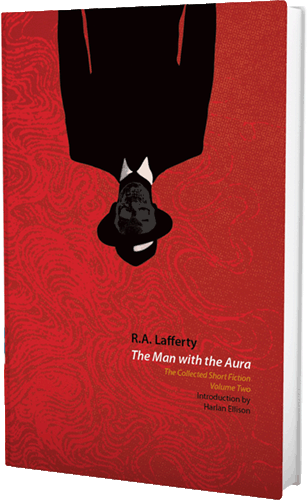
(I gotta say, I like this cover for the second volume a LOT better than the cover for the first.)
Interestingly, they've also announced a second limited run of Volume 1: The Man Who Made Models. So if you're kicking yourself for not getting it the first time round, you've been granted a second chance: http://www.centipedepress.com/home.html.
- Feast of Laughter editor, Kevin Cheek, announced the deadline for submissions to Issue 2; an announcement that Andrew Ferguson kindly reblogged with not a little urgency.
Says Kevin:
Deadlines:
- Expression of Interest: Saturday, January 31, 2015
- Content complete: Friday, February 20, 2015
- Publication: Saturday, March 18, 2015
Contact:
Email editor@feastoflaughter.org with all your ideas, submissions, stories, daydreams of things you'd love to write about R. A. Lafferty, and even requests.
- If you didn’t see Andrew’s photos of the Lafferty piece in This Land, you’ll wanna check those out. I would love to see Lafferty more and more often in contemporary journalistic print like this.
- Lafferty’s short story ‘What’s the Name of That Town?’ (1964) was mentioned last week on a WNPR news radio program summary: ‘It's a brilliant story on a number of levels and one of those levels has to do with the impossibility of suppressing historical records.’ (The radio program was about ‘historical deletion’, a theme indeed dear to Lafferty.)
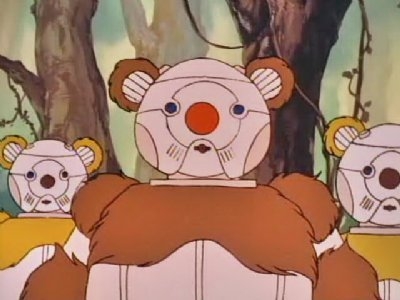
- It was pretty exciting to see Lafferty’s lesser known story ‘Thieving Bear Planet’ included on the Electric Literature website in an article entitled ‘31 Fairly Obscure Literary Monsters’. (It was a Halloween piece, but I didn’t see it until after I’d posted Issue 2 of Lafferty News in November.) It was also amusing to see that they used a picture of the ‘Ro-Bear Berbils’ from the Thundercats cartoon. When I saw the Berbils on an episode of the new Thundercats series a few years ago, I was immediately put in mind of the creatures in Lafferty’s ‘Thieving Bear Planet’. Seems I’m not the only one!
Andrew Ferguson also announced that his article for the scholarly journal Science Fiction Studies went live in November. This is only the second ever peer-reviewed academic essay on Lafferty, the last one from 1983. Andrew’s fascinating article is entitled ‘R.A. Lafferty's Escape from Flatland; or, How to Build a World in Three Easy Steps’ and draws on the work of Paul Ricoeur. I’ll do a full review of it at a later point.
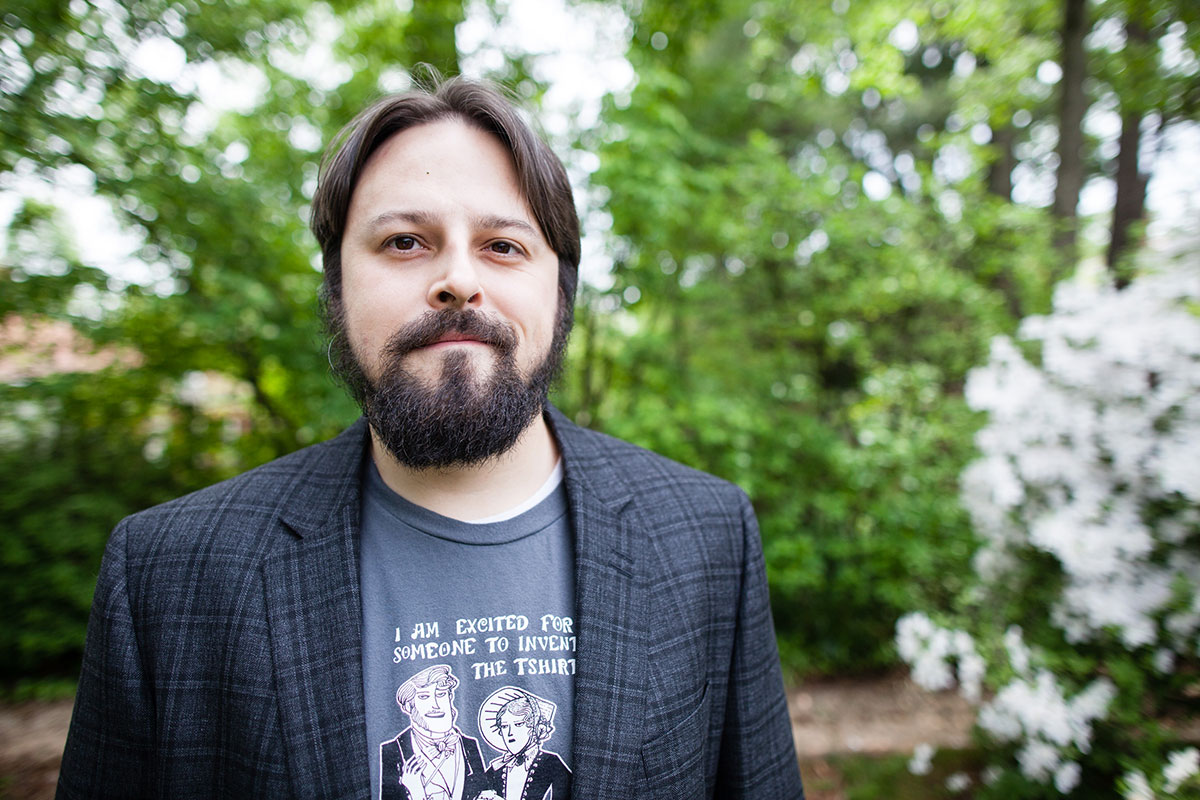
- Andrew himself made Lafferty news by being included in the ‘Bright Young Collectors’ series in Fine Books Magazine for his extensive Lafferty collection, one to make the rest of us drool and contemplate burglary. Mr. Ferguson even came out from behind the scholarly curtain to allow a fine photo portrait of his person to go public.
- It’s worth noting that the indefatigible and skilled Rich Persaud is always updating and innovating the ralafferty.org website in a number of ways. My favourite and most-used aspect of late is that now the title of every single published Lafferty story is listed in chronology of first publication, with the ability for anyone to comment on each story - a function I have availed myself of several times now and urge the rest of you to go and do likewise. This is a very easy and permanent way for the Lafferty community to really get busy with the joy of discussing his works. Every type of comment is welcome and appropriate, from simple exclamations of ‘this is one of my faves!’ or ‘I never liked this one’ to more in-depth commentary and analysis.
There is also a page that lists Lafferty’s own favourite stories, at least the ones he mentioned were personal favourites in interviews - with a few quotes from the man himself about this. Very intriguing. There’s a page devoted to listing out the books that Lafferty was known to have possessed in his personal library, usually with a comment or two from Lafferty about each book. This is updated at intervals when new information on the matter is obtained. And there’s a page with a working timeline of Lafferty’s life. And there’s more, but you must explore!
- In my own personal Lafferty-related news, I’m happy to report that I’ve received an offer from the University of Glasgow to start a PhD on Lafferty this October. It will develop the topic of the Honours Dissertation that I’m writing this semester on the ‘ecomonstrous’ aesthetic in Lafferty and Cormac McCarthy. Now to find some funding! If any of you know of some Lafferty Studies scholarship that I’ve somehow overlooked, please let me know! I’m sure they’d be happy to fund the first-ever doctoral thesis on Lafferty, right?
There have also been a number of Lafferty book and story reviews on various blogs in the past few months as well, but I’m going to do a separate blog post on those. Please let me know of any news I missed! (I’ll try to do these more frequently so they won’t end up as long and involved as this one.)
Saturday, September 24, 2011
Land of the Great Horses re-issue set for 2012

Well, looks like Lafferty's short story 'Land of the Great Horses' will at least get a fresh re-issue on the 'SF MASTERWORKS' series. Apparently Harlan Ellison's Dangerous Visions is set to become part of that series in 2012.
Now if they'd just go the rest of the way and release Lafferty's own short story collection Nine Hundred Grandmothers (and/or Past Master? Space Chantey? a whole new configuration of short stories?), then they'd finally have done their 'Masterworks' series some justice! (Seems like they've put out just about every other author out there! How can they leave out someone so critically acclaimed by his fellow s.f. writers?)
And while they're at it, they can put out Lafferty's novel Fourth Mansions on the Fantasy Masterworks series!
Friday, November 27, 2009
A Travelogue of the Laffertian Landscape, part 2: Closing in on the Mad Man Riding (Raucously) the Crest of the New Wave
In my early 20s I discovered science fiction as literature through C. S. Lewis’s ‘Space Trilogy’ (‘Cosmic Trilogy’ in UK) and in my nerdish obsessive tendency proceeded to read s.f. non-stop for 2 or 3 years.  Now I had grown up on sci-fi films and TV and loved the genre, but books-wise had only read fantasy and horror as a child and teen. Furthermore, I was ‘singing’ in a ‘sci-fi/horror’ punk rock band at the time (Blaster the Rocket Boy, later Blaster the Rocket Man). My childhood imagination had readily poured out in my lyrics along with my young-adulthood faith, so that our songs were a strange and heady mix of the spiritual experiences of monsters and robots and aliens. I was a huge C. S. Lewis fan (reading his Mere Christianity at age 18 genuinely changed my whole life, especially by finally fully switching on my intellect and effectively and thrillingly meshing it with my imagination and faith) and I was writing science-fictional lyrics from a Christian worldview but still hadn’t read his science fiction books! A dear friend finally posted me the books in the mail and prompted me to read them, which yet again changed my life.
I must admit, though, I look back on those 2 or 3 years of slavish voracious s.f. reading with some nausea. It was mostly tripe, sadly (I wasted some precious hours of my life on the revered Asimov – but bless him, he’s a classic in his way and is still highly pleasurable in the rare story—reading ‘The Bicentennial Man’ aloud to my children was a fine moment).
However, I think what I mostly identified with then (and still do sometimes) was a phase in s.f. history called the ‘new wave’ in the 1960s and 70s. The hotties of this loose grouping were Roger Zelazny, Samuel R. Delany, and Harlan Ellison in America (gotta love those names!). Apparently it was Brits like Brian Aldiss and J. G. Ballard that started the literary trend in this experimental direction. Philip K. Dick would go here as well and I’m sure there are others I’m glaringly overlooking. It was particularly some of the feel from Ellison and Zelazny that grabbed me, and even more so Aldiss drew me into his flame for a period. There was a quirkiness and ‘coolness’ and ‘science fantasy’ (in the good way) feel to the Americans. Aldiss had their oddity but with the much more articulate and patently intellectual tone usually ingrained in British writing (which for most of my life I by far preferred – I’ve now come to appreciate quite acutely the American style of intelligent prose as well).
In this period (the 60s/70s, as well as my phase of reading this work, which was the mid-90s) there emerged another American author that surely by default of name had to align with this grouping: one R. A. Lafferty. Initially he has the same quirky feel (not as ‘cool’ though, the first thing to set him apart), the oddity, the wry wit and wisdom. Indeed, all of the aforementioned authors praised Lafferty without exception or qualification. Here’s what they were saying about his first (and most well known) novel, Past Master, in 1968 (a novel I didn’t read until much later in my Lafferty experience).
Now I had grown up on sci-fi films and TV and loved the genre, but books-wise had only read fantasy and horror as a child and teen. Furthermore, I was ‘singing’ in a ‘sci-fi/horror’ punk rock band at the time (Blaster the Rocket Boy, later Blaster the Rocket Man). My childhood imagination had readily poured out in my lyrics along with my young-adulthood faith, so that our songs were a strange and heady mix of the spiritual experiences of monsters and robots and aliens. I was a huge C. S. Lewis fan (reading his Mere Christianity at age 18 genuinely changed my whole life, especially by finally fully switching on my intellect and effectively and thrillingly meshing it with my imagination and faith) and I was writing science-fictional lyrics from a Christian worldview but still hadn’t read his science fiction books! A dear friend finally posted me the books in the mail and prompted me to read them, which yet again changed my life.I must admit, though, I look back on those 2 or 3 years of slavish voracious s.f. reading with some nausea. It was mostly tripe, sadly (I wasted some precious hours of my life on the revered Asimov – but bless him, he’s a classic in his way and is still highly pleasurable in the rare story—reading ‘The Bicentennial Man’ aloud to my children was a fine moment).
However, I think what I mostly identified with then (and still do sometimes) was a phase in s.f. history called the ‘new wave’ in the 1960s and 70s. The hotties of this loose grouping were Roger Zelazny, Samuel R. Delany, and Harlan Ellison in America (gotta love those names!). Apparently it was Brits like Brian Aldiss and J. G. Ballard that started the literary trend in this experimental direction. Philip K. Dick would go here as well and I’m sure there are others I’m glaringly overlooking. It was particularly some of the feel from Ellison and Zelazny that grabbed me, and even more so Aldiss drew me into his flame for a period. There was a quirkiness and ‘coolness’ and ‘science fantasy’ (in the good way) feel to the Americans. Aldiss had their oddity but with the much more articulate and patently intellectual tone usually ingrained in British writing (which for most of my life I by far preferred – I’ve now come to appreciate quite acutely the American style of intelligent prose as well).
In this period (the 60s/70s, as well as my phase of reading this work, which was the mid-90s) there emerged another American author that surely by default of name had to align with this grouping: one R. A. Lafferty. Initially he has the same quirky feel (not as ‘cool’ though, the first thing to set him apart), the oddity, the wry wit and wisdom. Indeed, all of the aforementioned authors praised Lafferty without exception or qualification. Here’s what they were saying about his first (and most well known) novel, Past Master, in 1968 (a novel I didn’t read until much later in my Lafferty experience).

I read it in one sitting; I couldn’t put it down. Lafferty has the power which sets fires behind your eyeballs. There is warmth, illumination, and a certain joy attendant upon the experience. He’s good. [Roger Zelazny]
This is a great galloping madman of a novel, drenched in sound and color… As with everything the man writes, the wind of imagination blows strongly… and we can settle back to appreciate the special magic proffered by the madman Lafferty. [Harlan Ellison]
The Lafferty madness… is peppered with nightmare: witches, lazarus-lions, hydras, porsche’s-panthers, programmed killers that never fail, and a burlesqued black mass. One hears of black comedy? There are places in PAST MASTER where humor goes positively ultraviolet. [Samuel R. Delany]
…wild, subtle, demonic, angelic, hilarious, tragic, poetic, a thundering melodrama and a quest into the depths of the human spirit… R. A. Lafferty has always been uniquely his own man. [Poul Anderson]
It’s a minor miracle that a serious philosophical and speculative work should be written so colorfully and so lyrically. There is, happily, no way to categorize the book: it has elements of science fiction, of pure fantasy, of poetry, of historical fiction; it is sharply critical and marvellously gentle; very serious and irrepressibly funny; profoundly symbolic and gutsy-realistic by (unexpected) turns. A first rate speculative work. [Judith Merril]
Yet he transcends his peers, he transcends. I don’t mean to be patronizing to clearly great writers who went on to much more renown than Lafferty ever knew. But I think even they knew they were in the presence of someone truly in a league of his own, even if that distinction pushed him into the realm of the ‘mad’ and ‘wild’ like an animal-skinned prophet in the desert.
I first happened upon one or two of his stories in old s.f. mags I had collected second hand and certainly the name stuck if no other impression was made. (I do remember the ending of a story I was otherwise not impressed with, something about a witch making a chilli recipe, that totally made my heart thud against its cage with painful yearning – it utterly surprised me, but it didn’t yet shock me out of my stupidity for I didn’t at that time take up the quest for more Lafferty.) Then I came across the entry on Lafferty in the Encyclopedia of Science Fiction (edited by the brilliant scholar John Clute). Yes, I know, it’s utterly geeky to own such a tome, but honestly it’s actually high quality lit. crit.! 
Next: I properly encounter my first Lafferty story. It takes a minute to say, so please forgive the long entry…
Subscribe to:
Posts (Atom)